3D Immersive
Walkthroughs
Five environments built as walkthrough scenes, each exploring a different visual language: horror and creature anatomy, sunlit classical ruin, retrofuturistic prop design, pure white architectural geometry, atmospheric buried mythology. No shared brief. Just the question of what a space can make you feel.
01 / Demon Gate
Demon Gate
Eldritch Horror · Creature Architecture
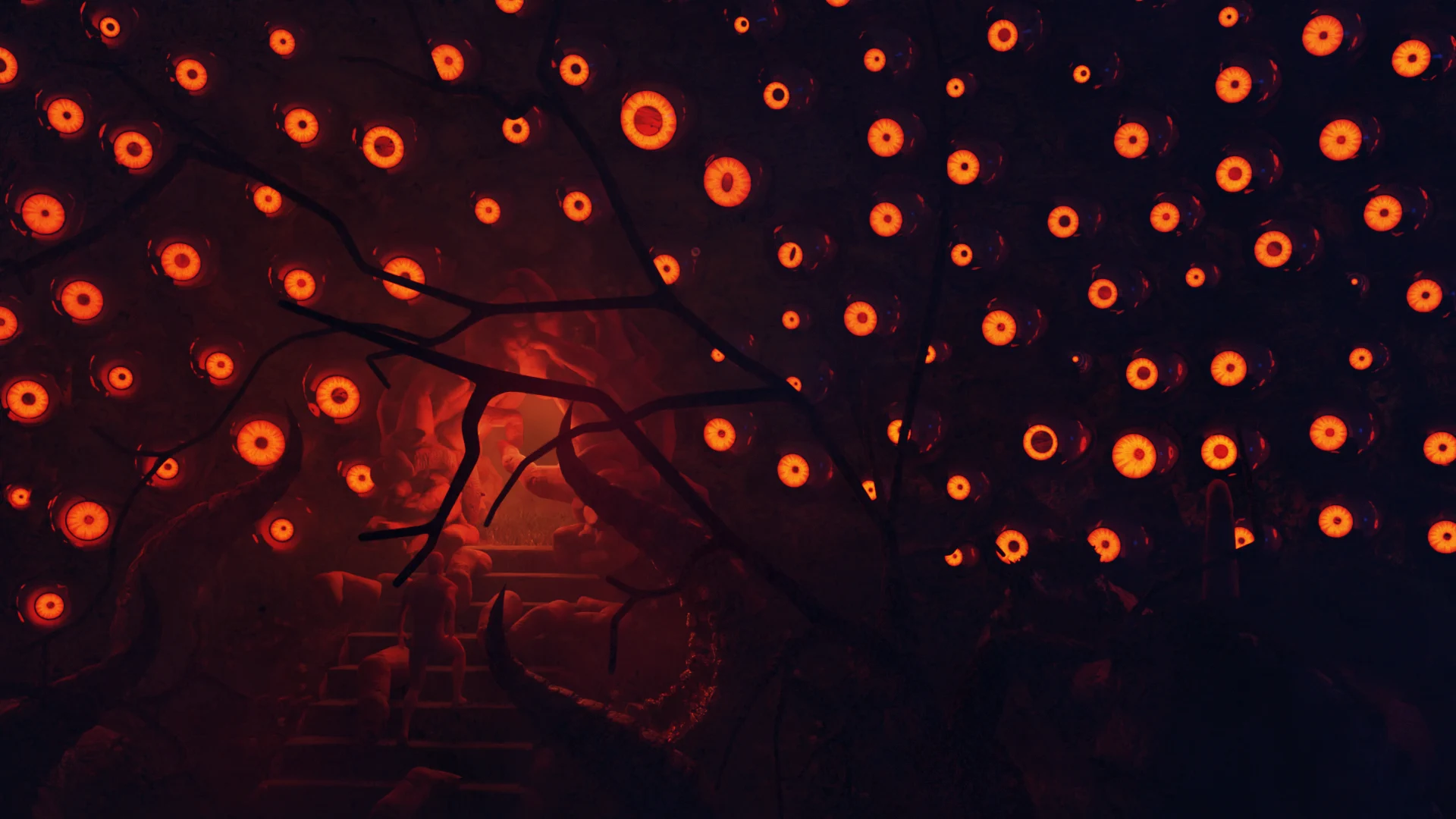
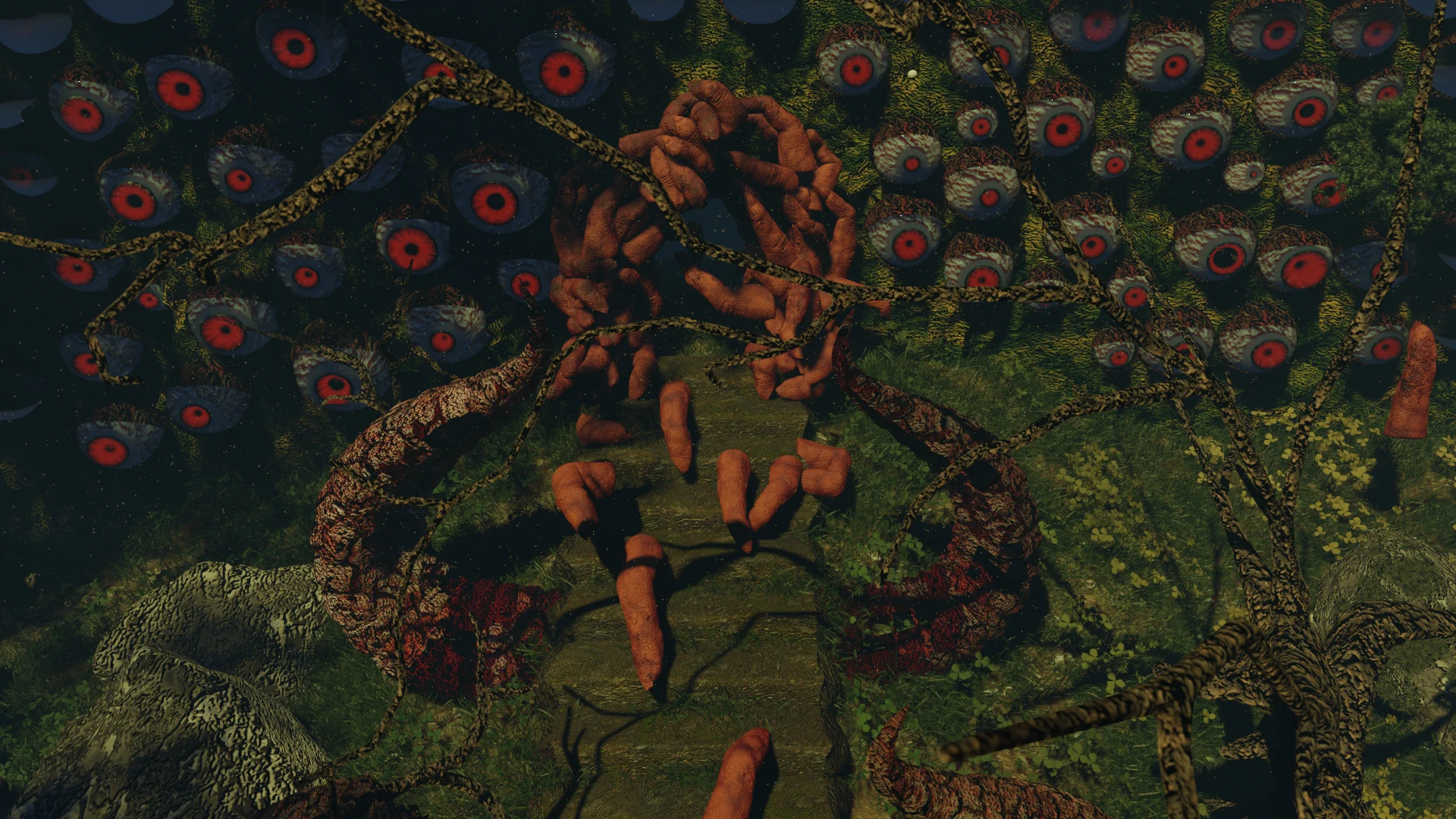
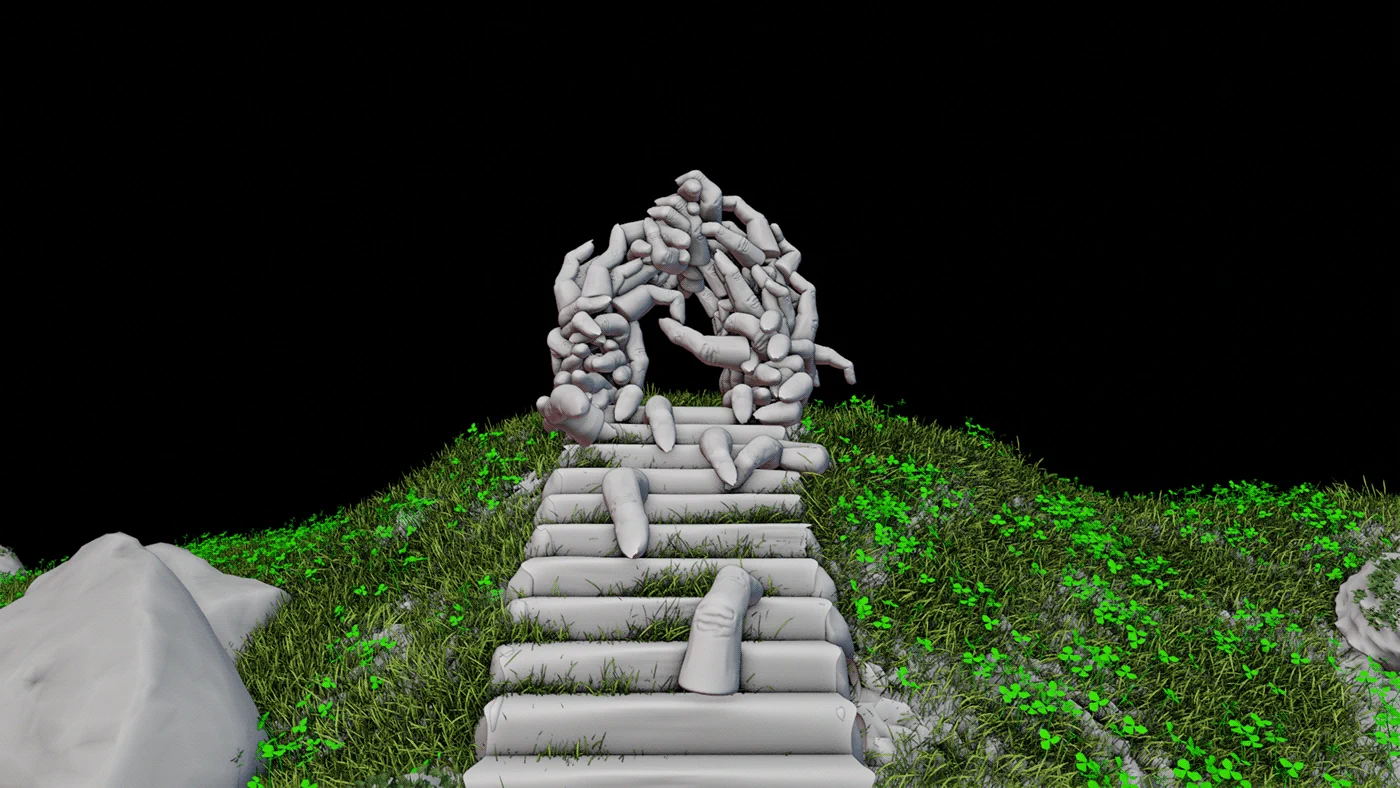
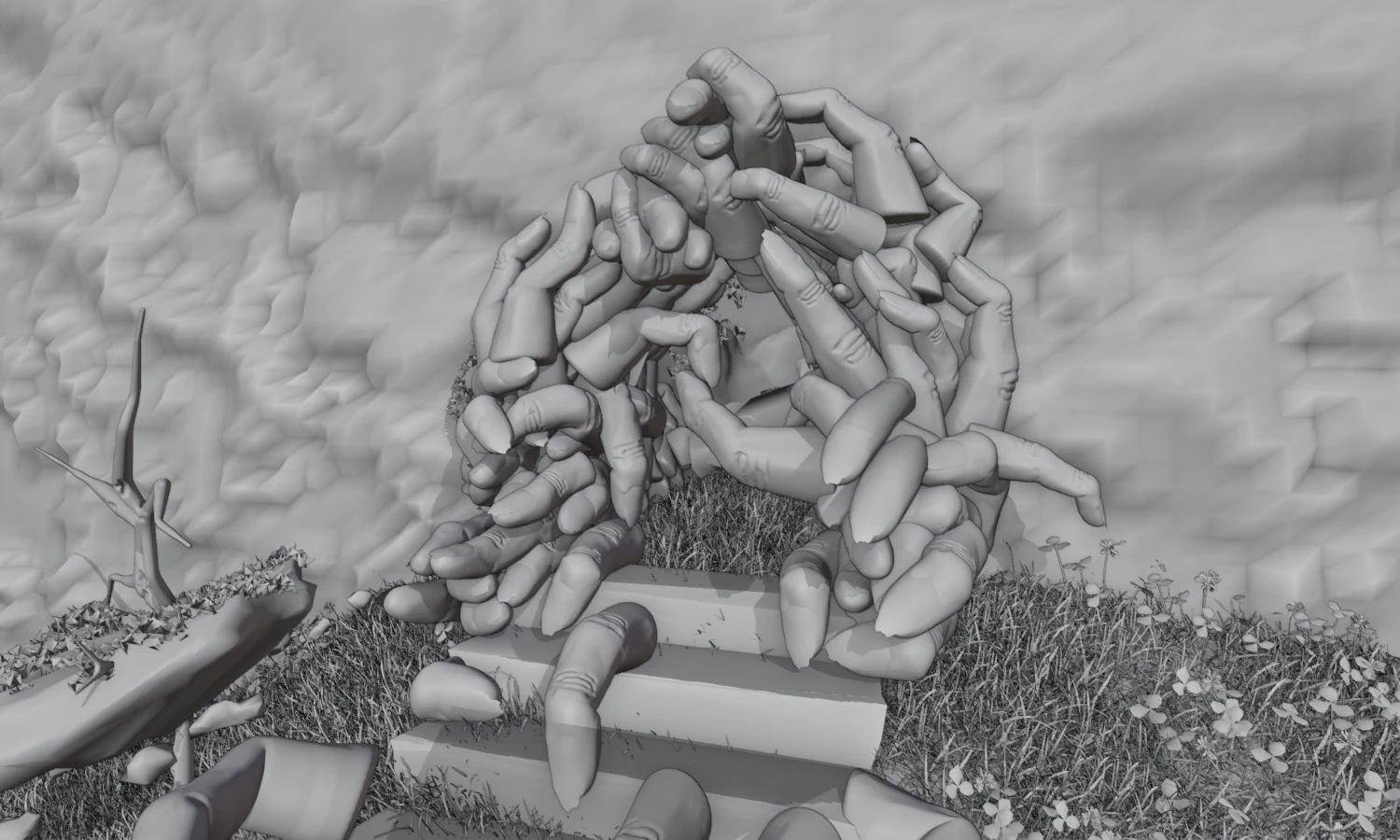
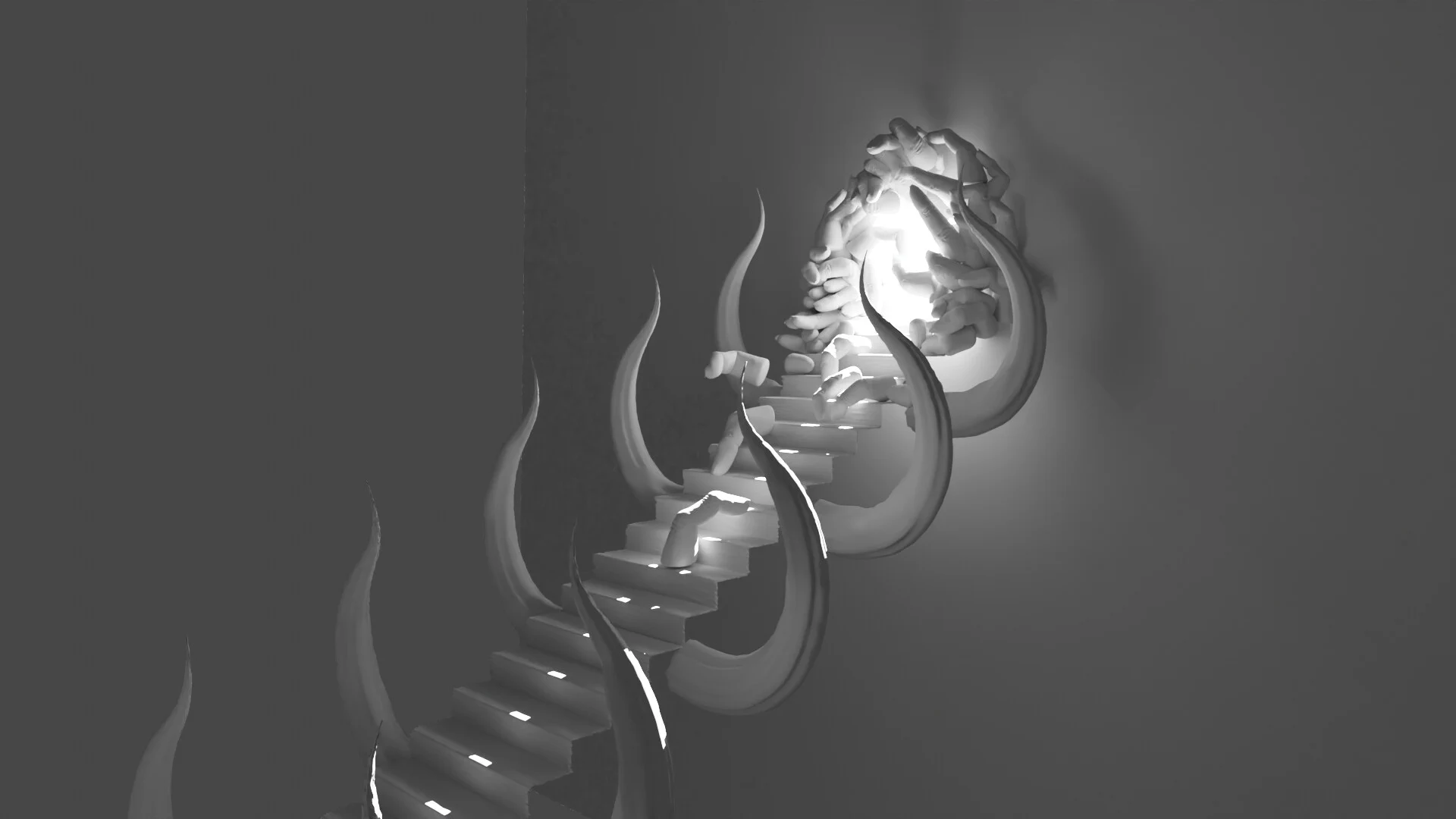
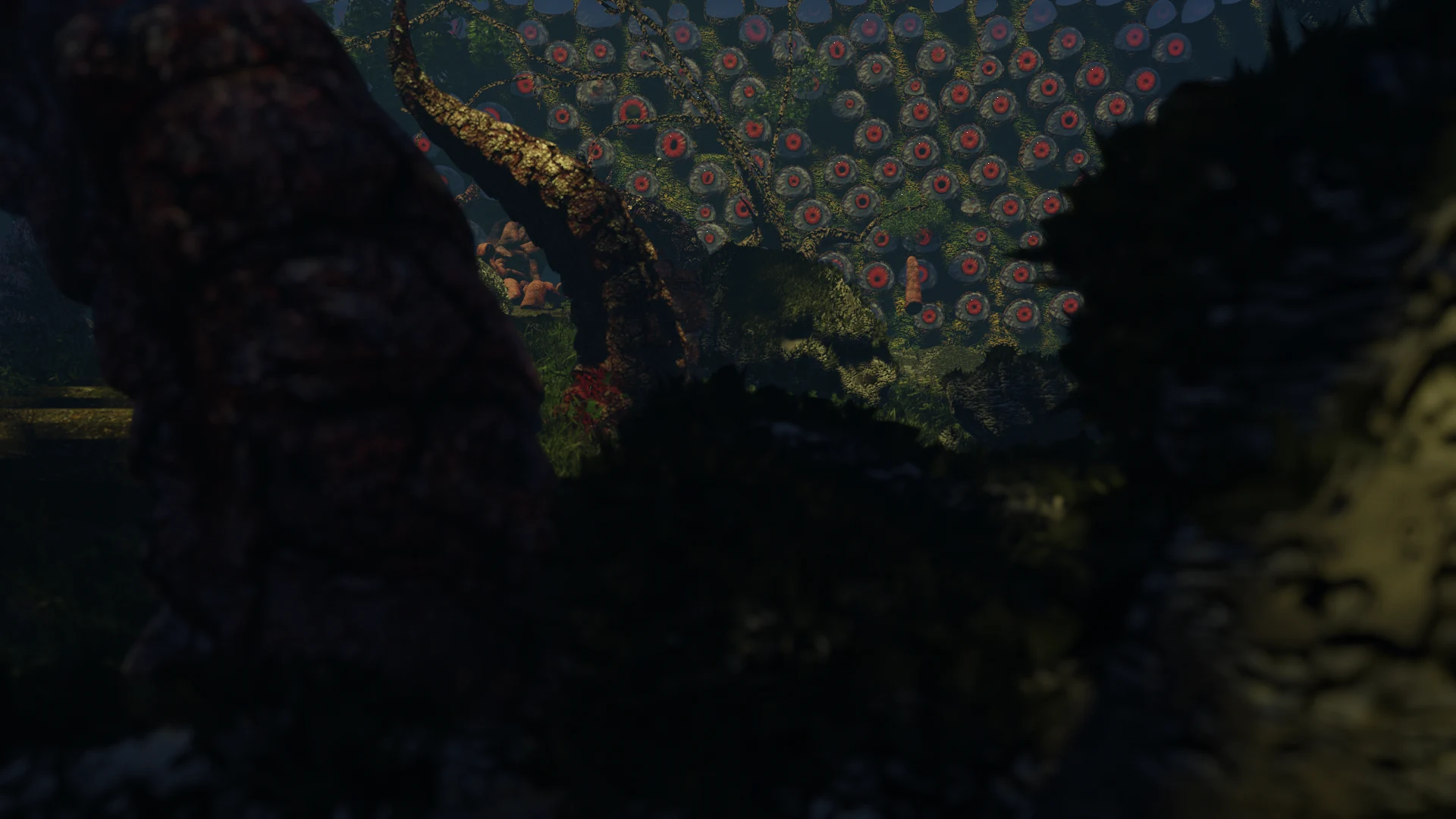
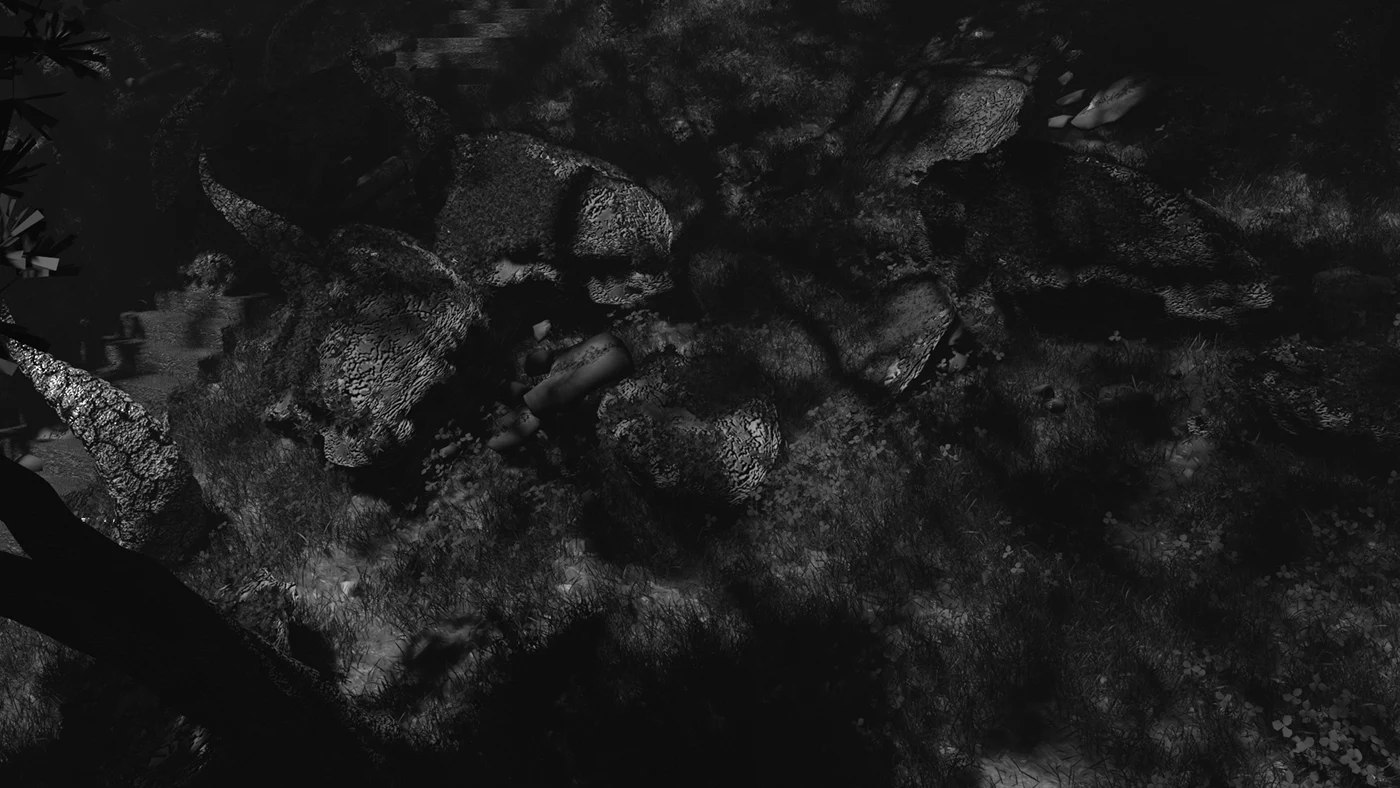
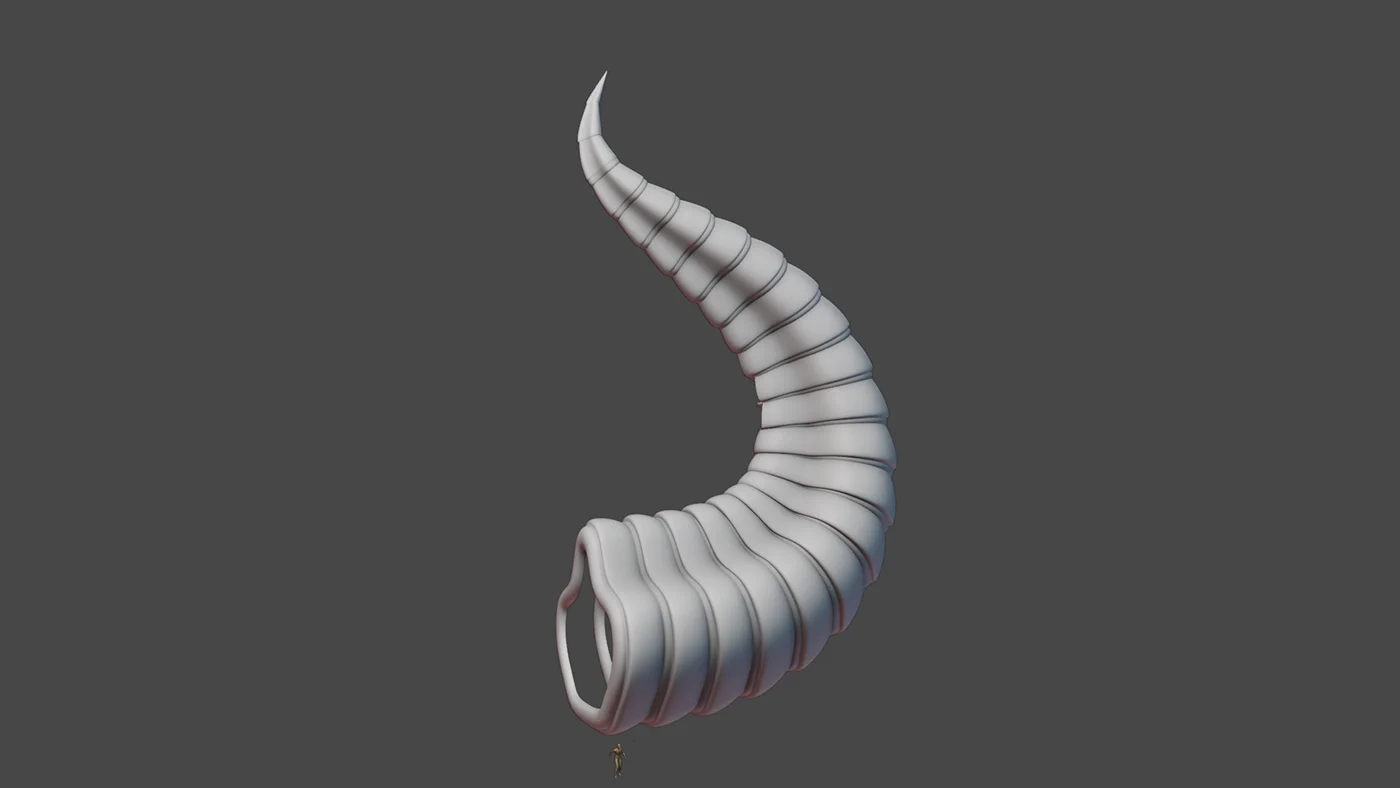
The gate isn't built. It's grown. Two columns of intertwined creature limbs frame a staircase cut into a hillside, with a blinding portal at the threshold. The approach is flanked by demonic flame-like tendrils rising from the ground. In the fully textured render, the surrounding landscape becomes an ecosystem: ground cover made of eye-stalked flora, vine-like organic sprawl, and a soil texture that reads more like skin than earth. The top-down camera angle was a deliberate choice. You never fully see the gate from the front, only descend into it.
02 / Enchanted Forest
Enchanted Forest
Nature · Ancient Architecture · Photorealism
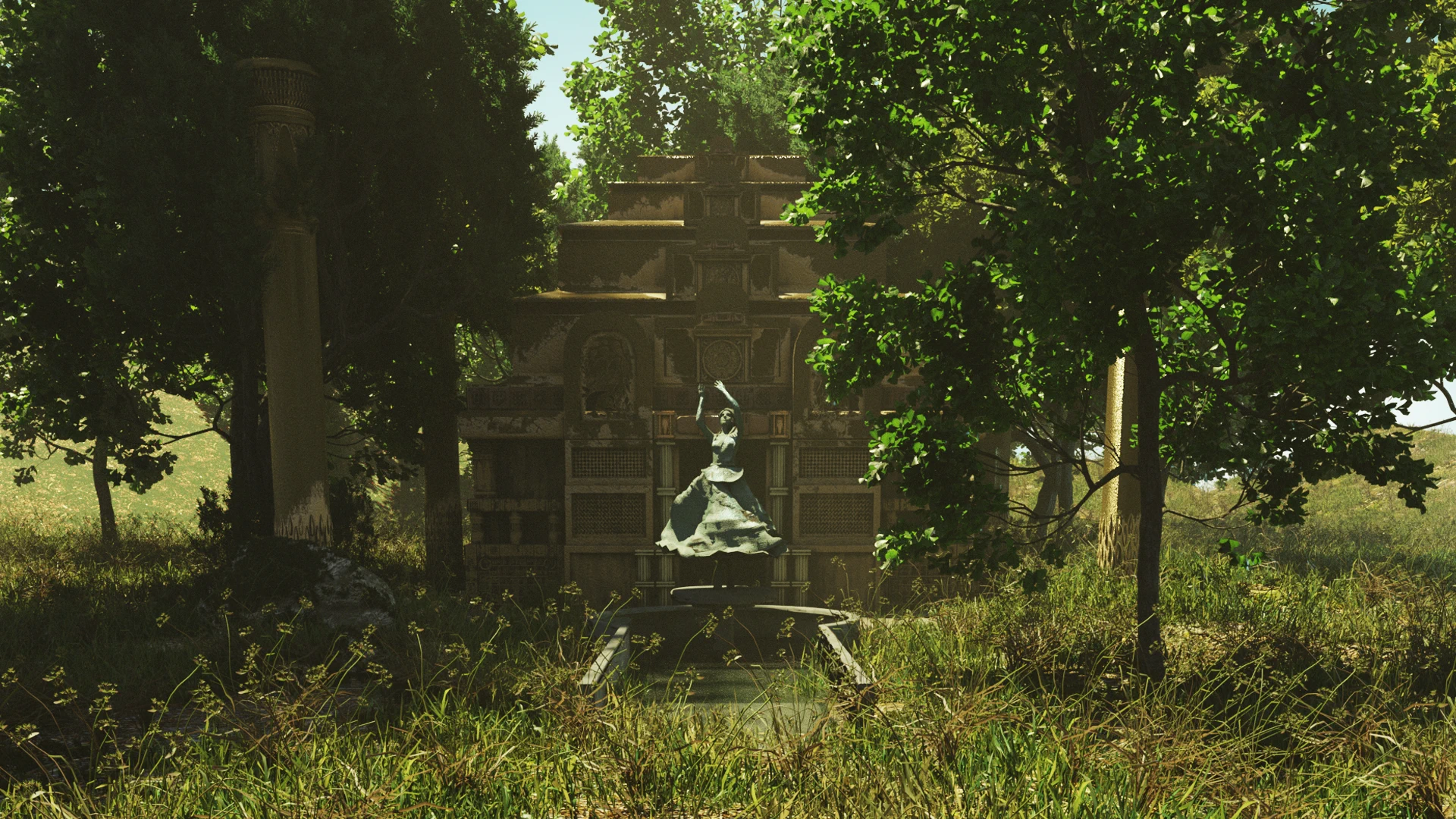
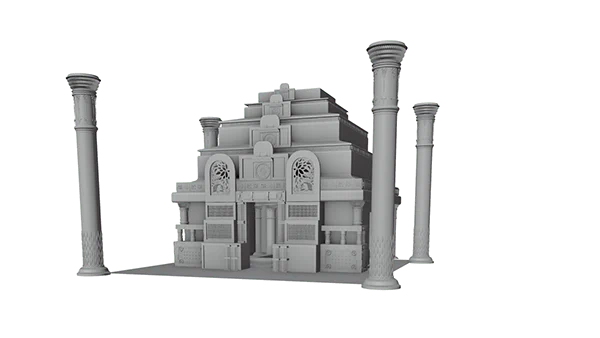
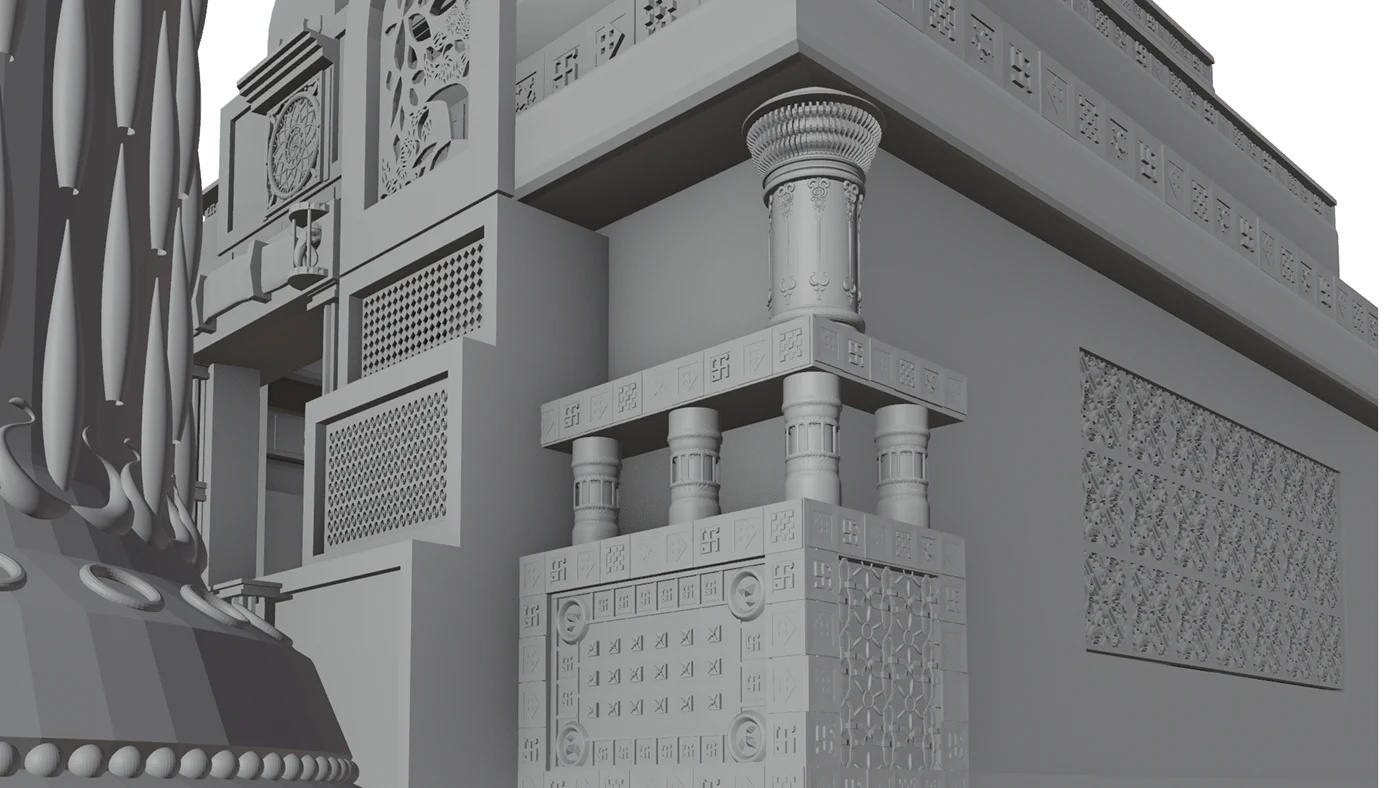
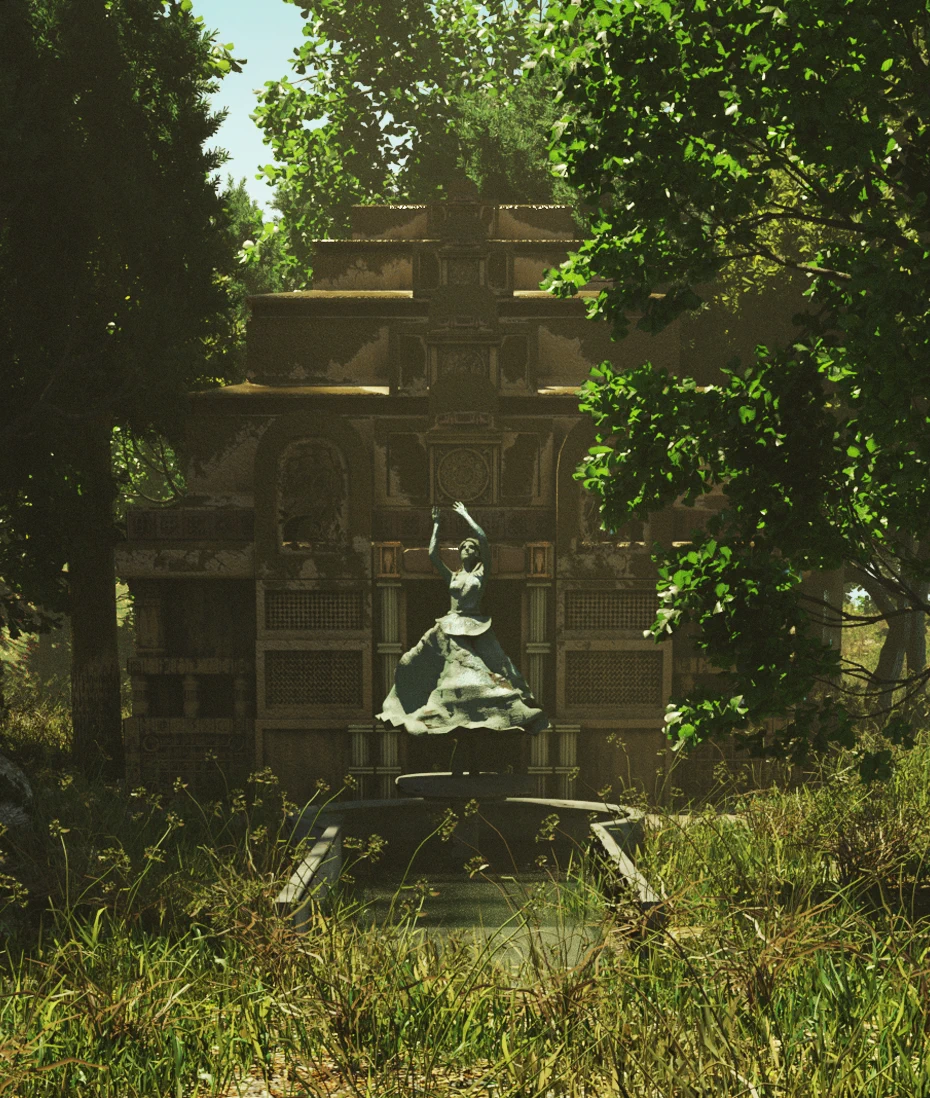
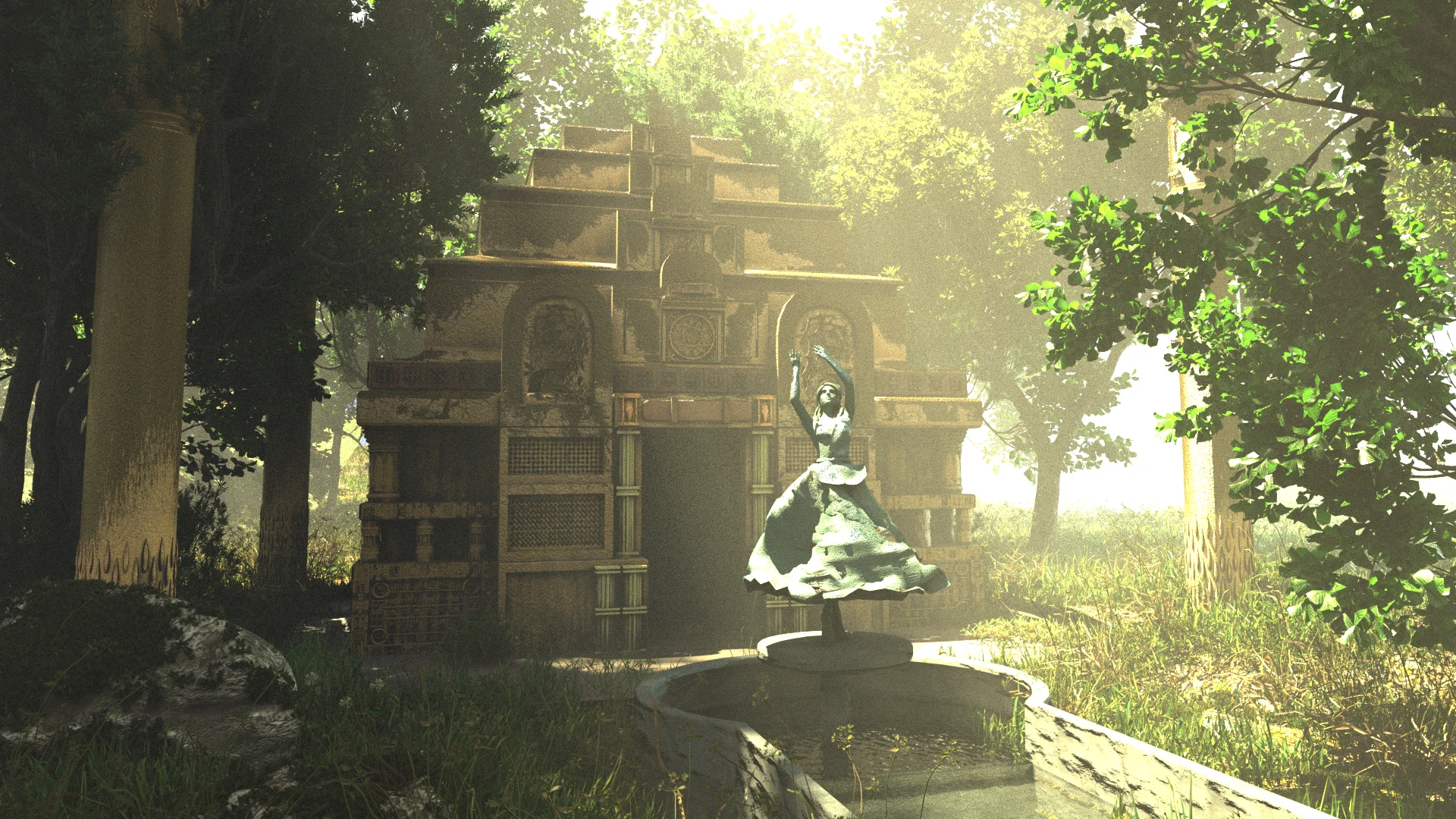
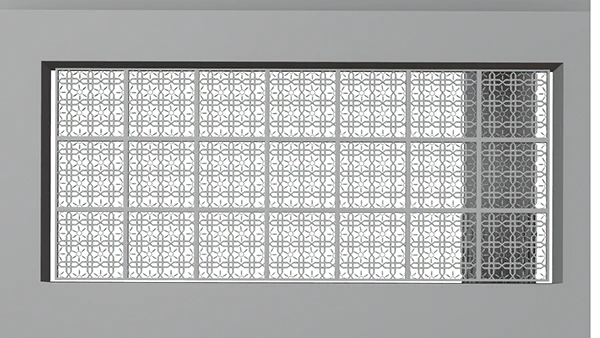
An ornate stone shrine sits at the centre of a sun-drenched forest clearing. The building is a compact temple facade with carved decorative panels, round rose windows, and layered cornice work, flanked by freestanding columns that have partially separated from the structure over time. A bronze dancer statue stands at the entrance, catching afternoon light through the canopy. The grey-box blockout shows the architectural planning: the building's proportions, column placement, and stepped base. The final render grounds it in a naturalistic setting with deep grass, mature trees, and a sky that feels like early afternoon.
03 / Gas Station
Gas Station
Retrofuturism · Prop Design · PBR Materials
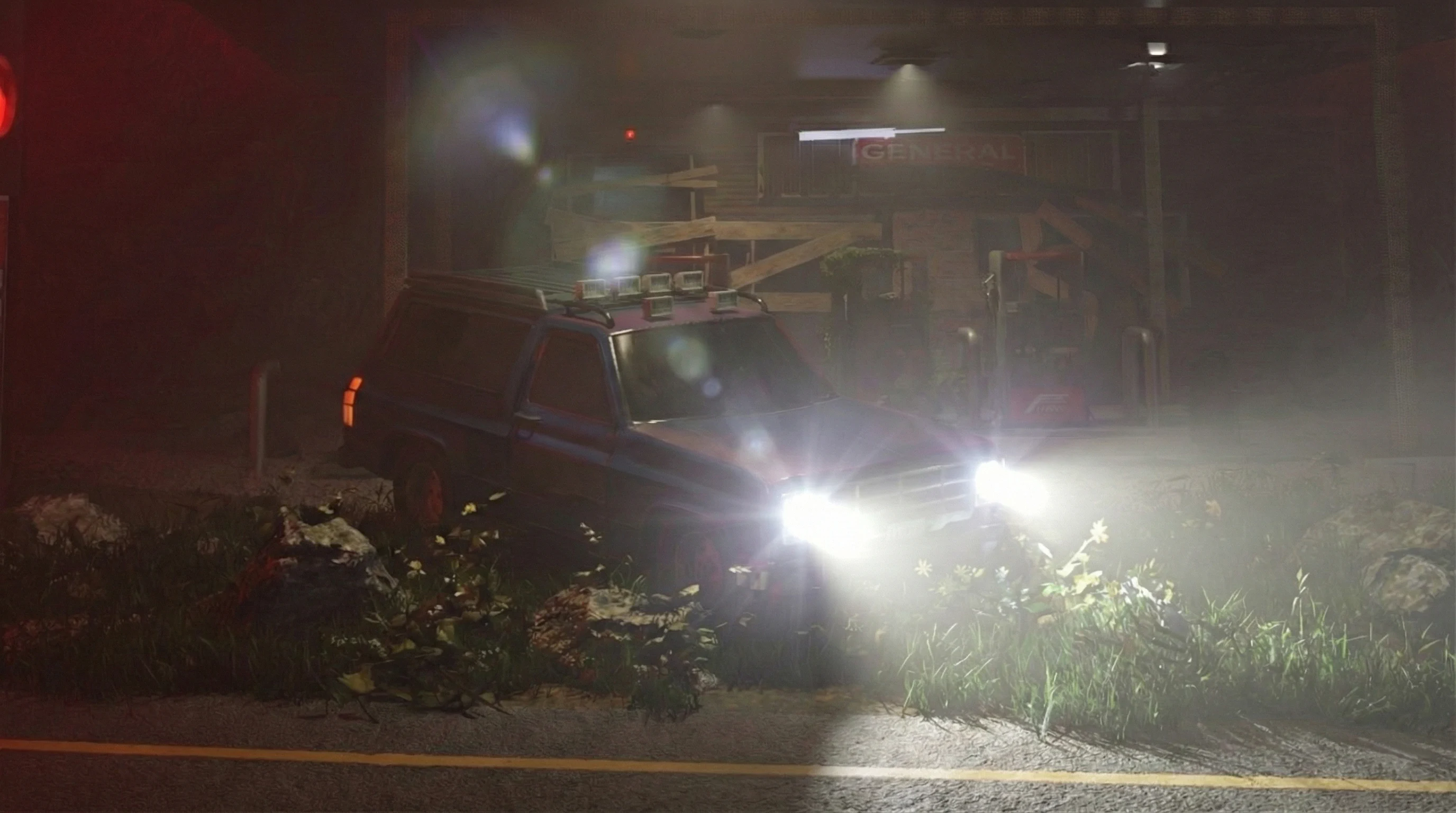
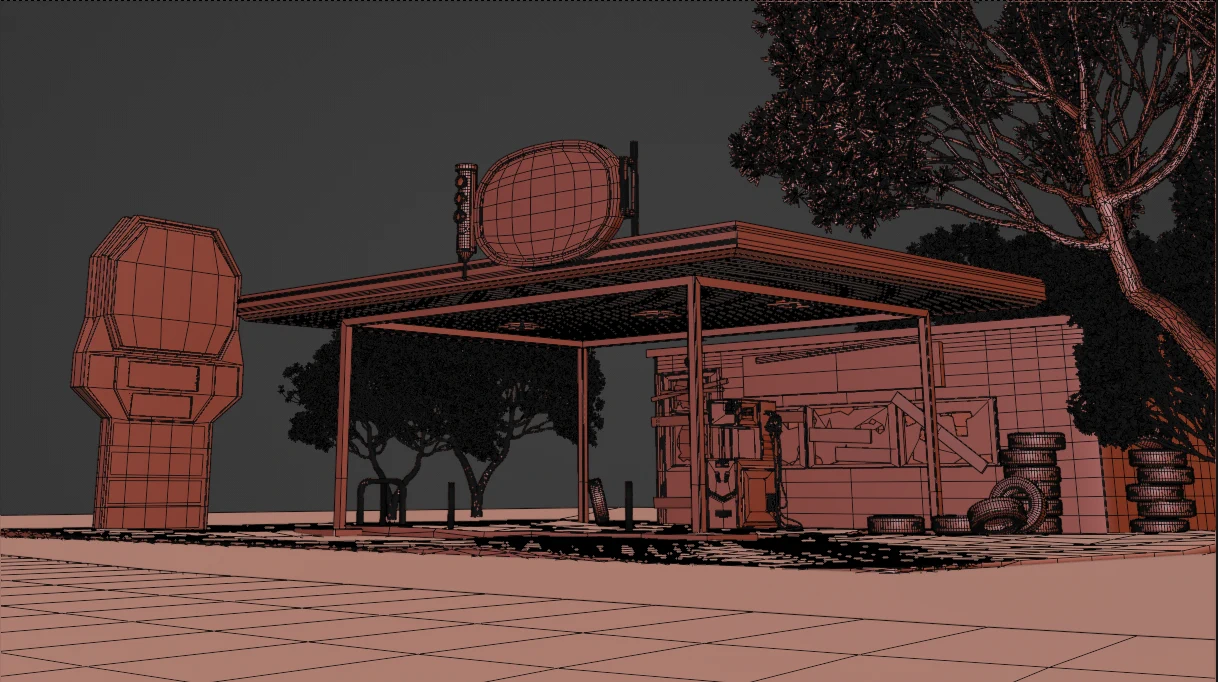
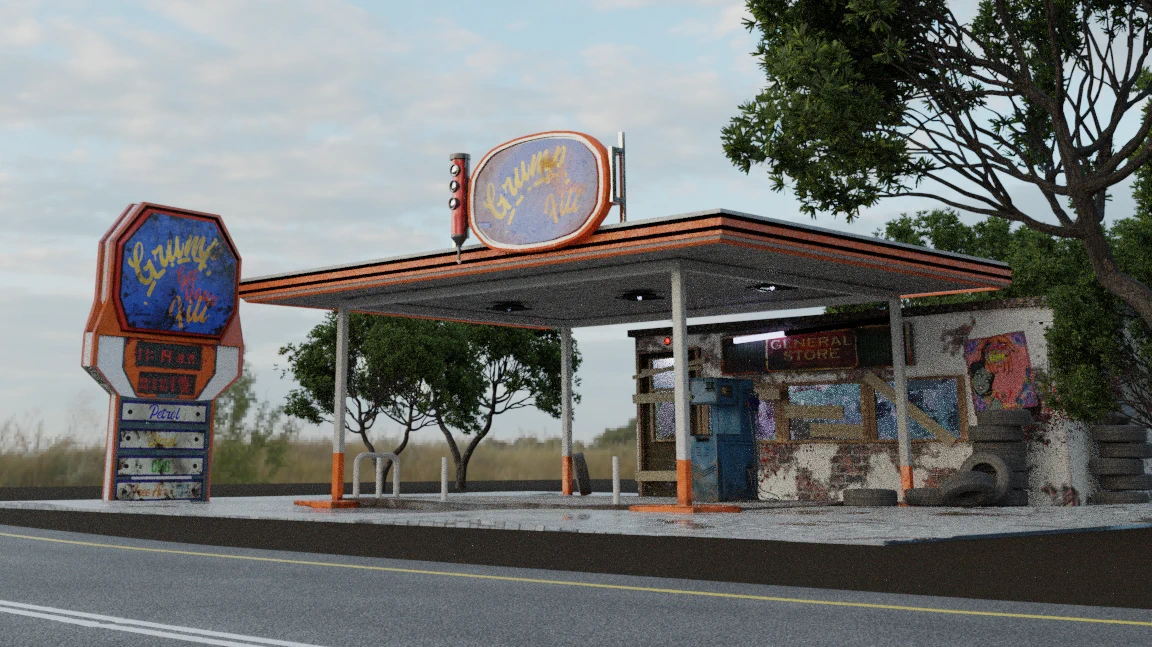
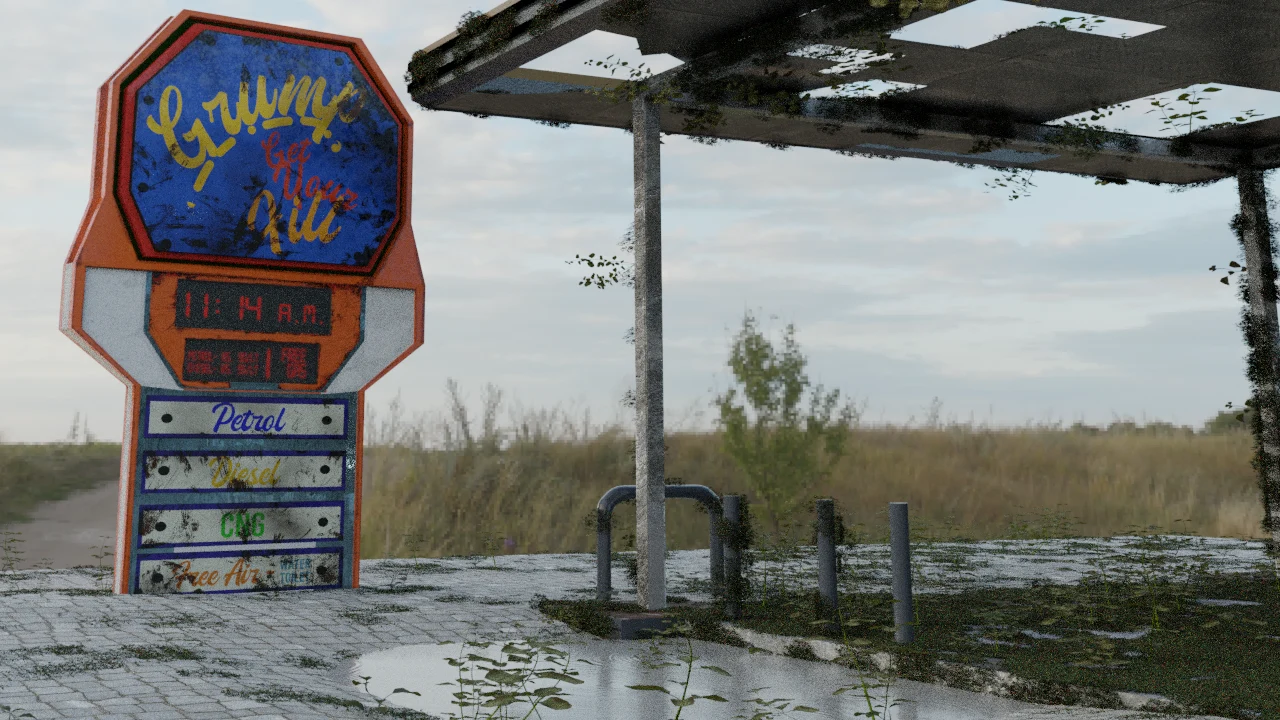
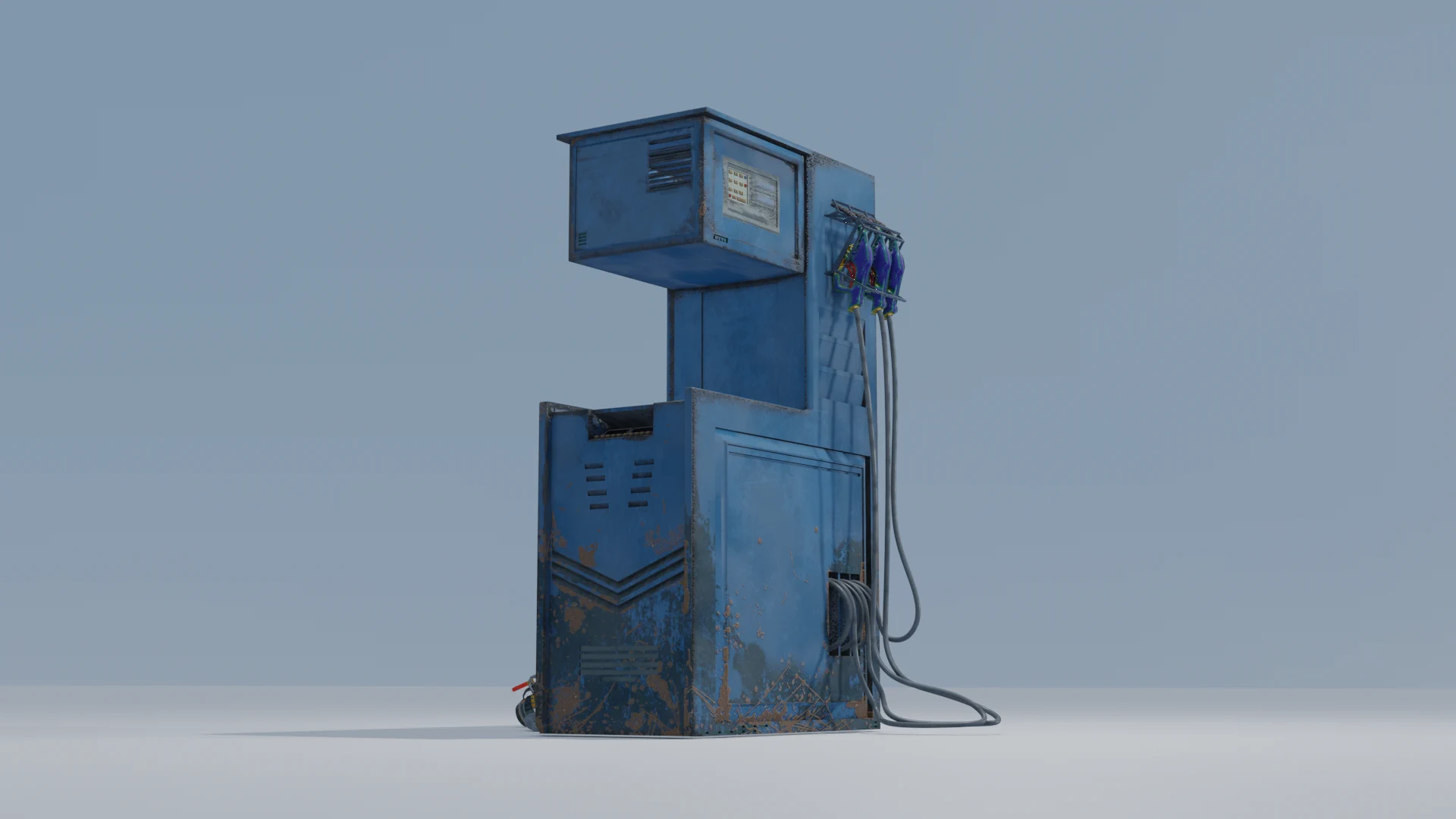
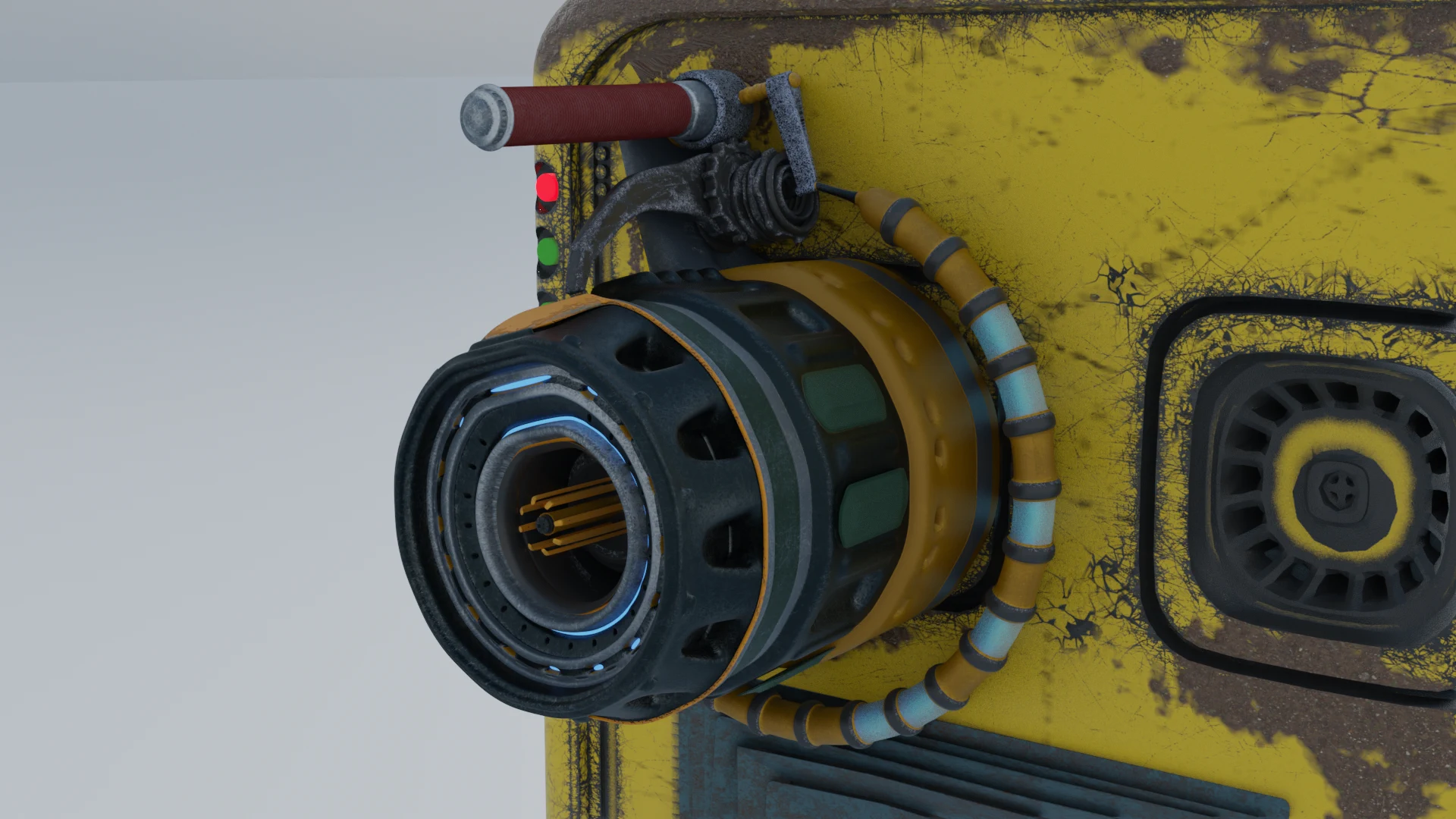
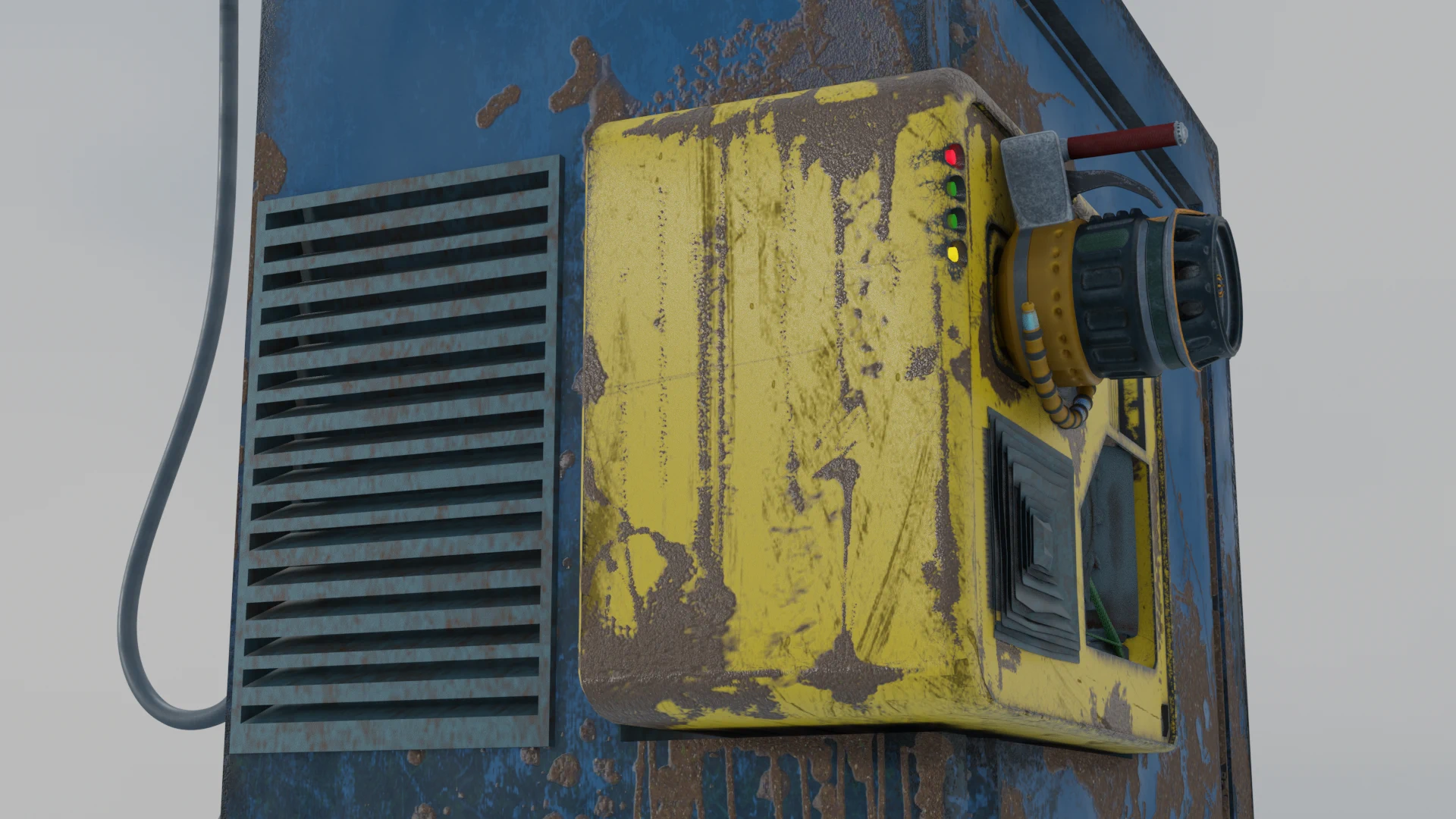
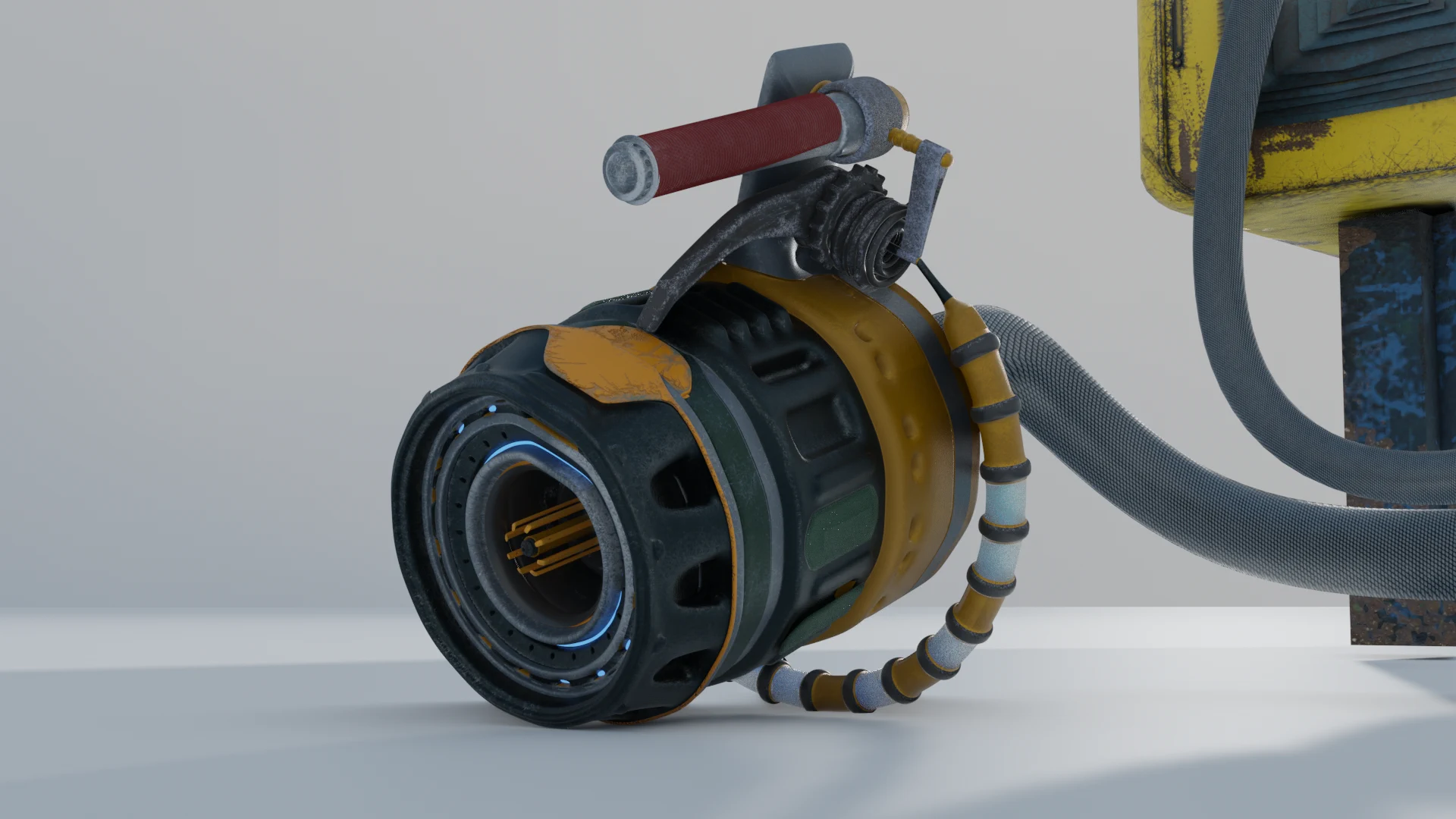
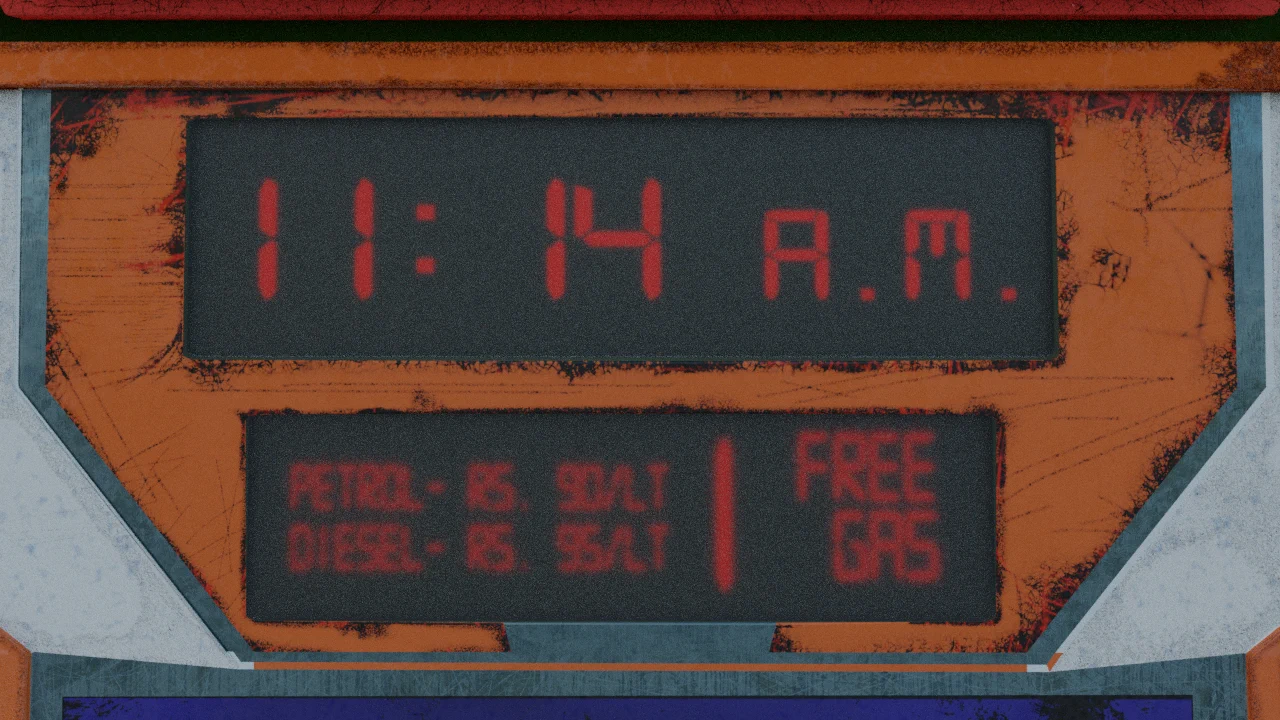
A mid-century roadside station called 'Granny Art Petrol', left standing while the world moved on and quietly upgraded itself. The canopy and signage belong to a different era: hand-painted octagonal lettering, rusted hoardings, flat prairie horizon. The props tell a different story. A blue electric charging unit with exposed cabling sits where a petrol pump once stood. A yellow plug-in charger with a connector thick with machined detail is mounted to the side. Hoverboard display racks line the forecourt. Each prop was built as an independent model with full PBR material work before being placed into the scene, treating them as products first and environment pieces second.
04 / Temple
Temple
Classical Architecture · Geometry Study · White Render
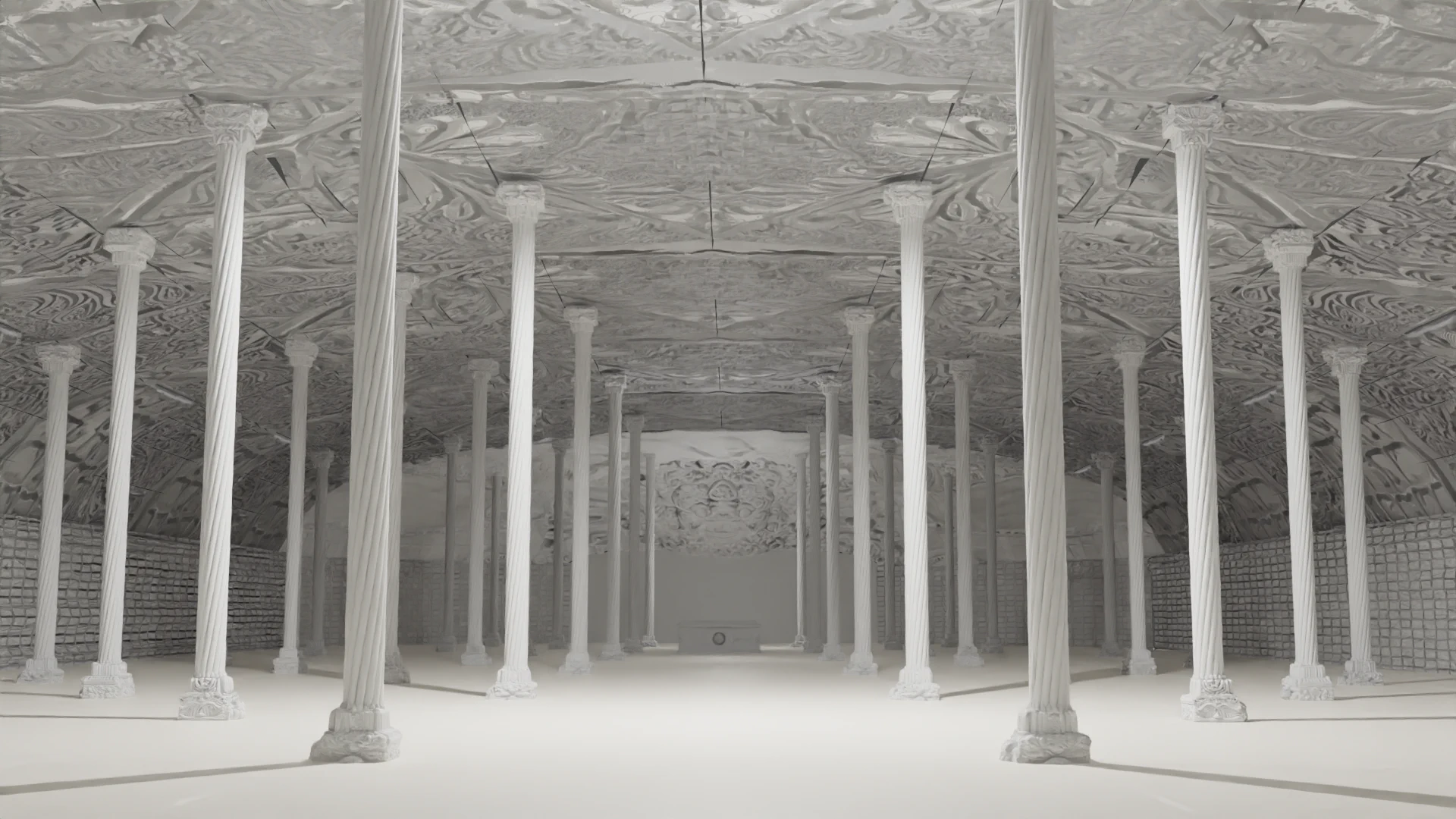
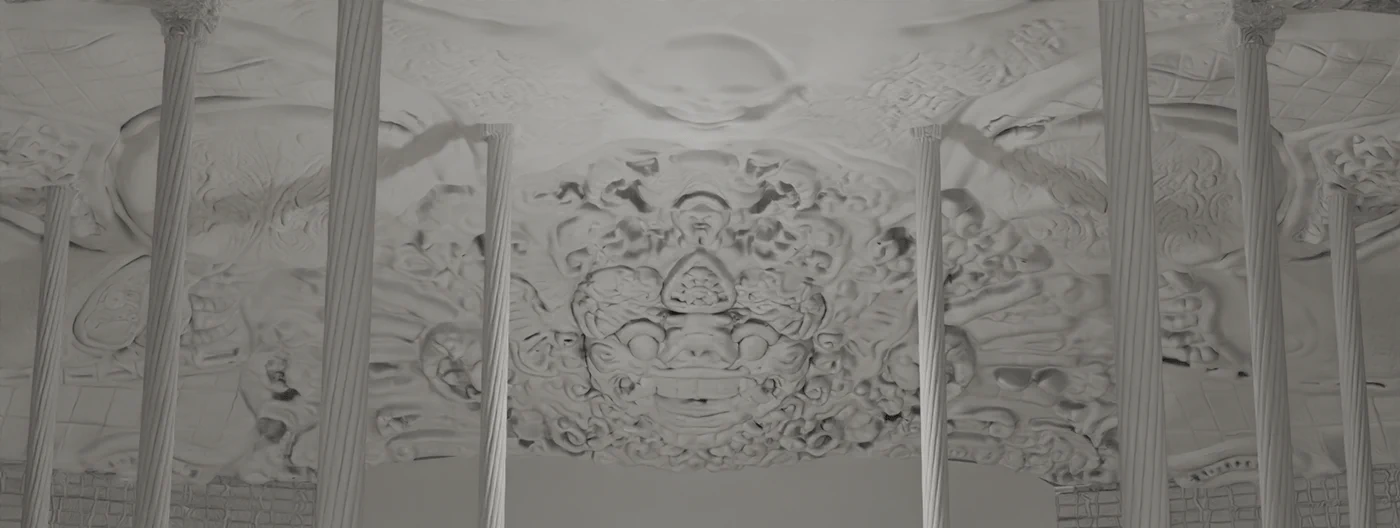
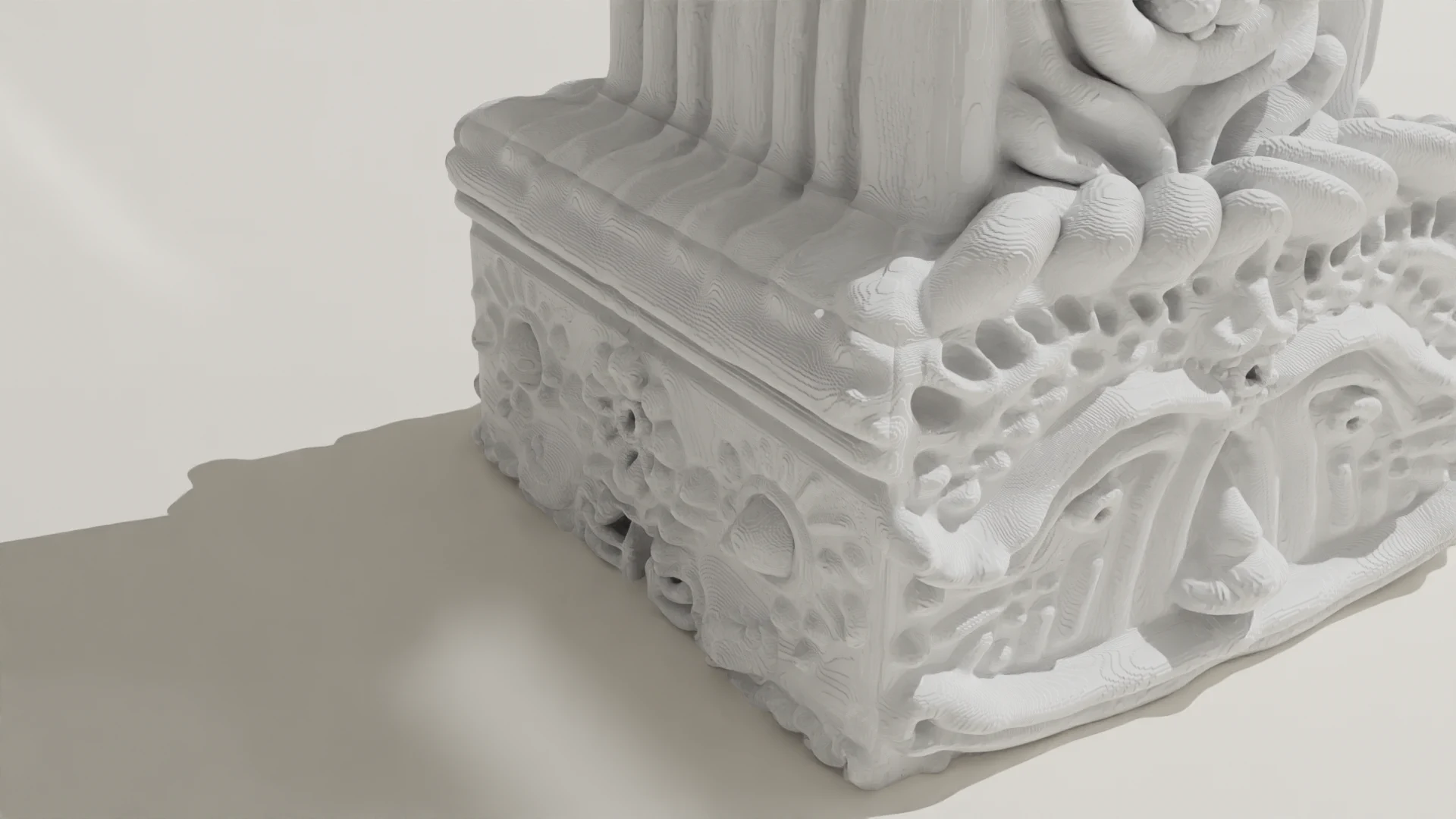
A classical temple interior rendered entirely in white, no textures, no colour, no material differentiation. The decision was deliberate: stripping everything back forces all the weight to fall on geometry and proportion. Rows of Corinthian columns line a processional nave of considerable depth. Above them, an ornate carved ceiling panel carries heraldic medallions and decorative borders in high relief. The close-up detail of the plinth reveals something different underneath: dense, organic, almost coral-like stonework with tentacular forms that work against the classical exterior above. The building knows what it looks like on the surface. The base tells a different story.
05 / Old Buried
Old Buried
Atmospheric · Prop Study · Cinematic Lighting
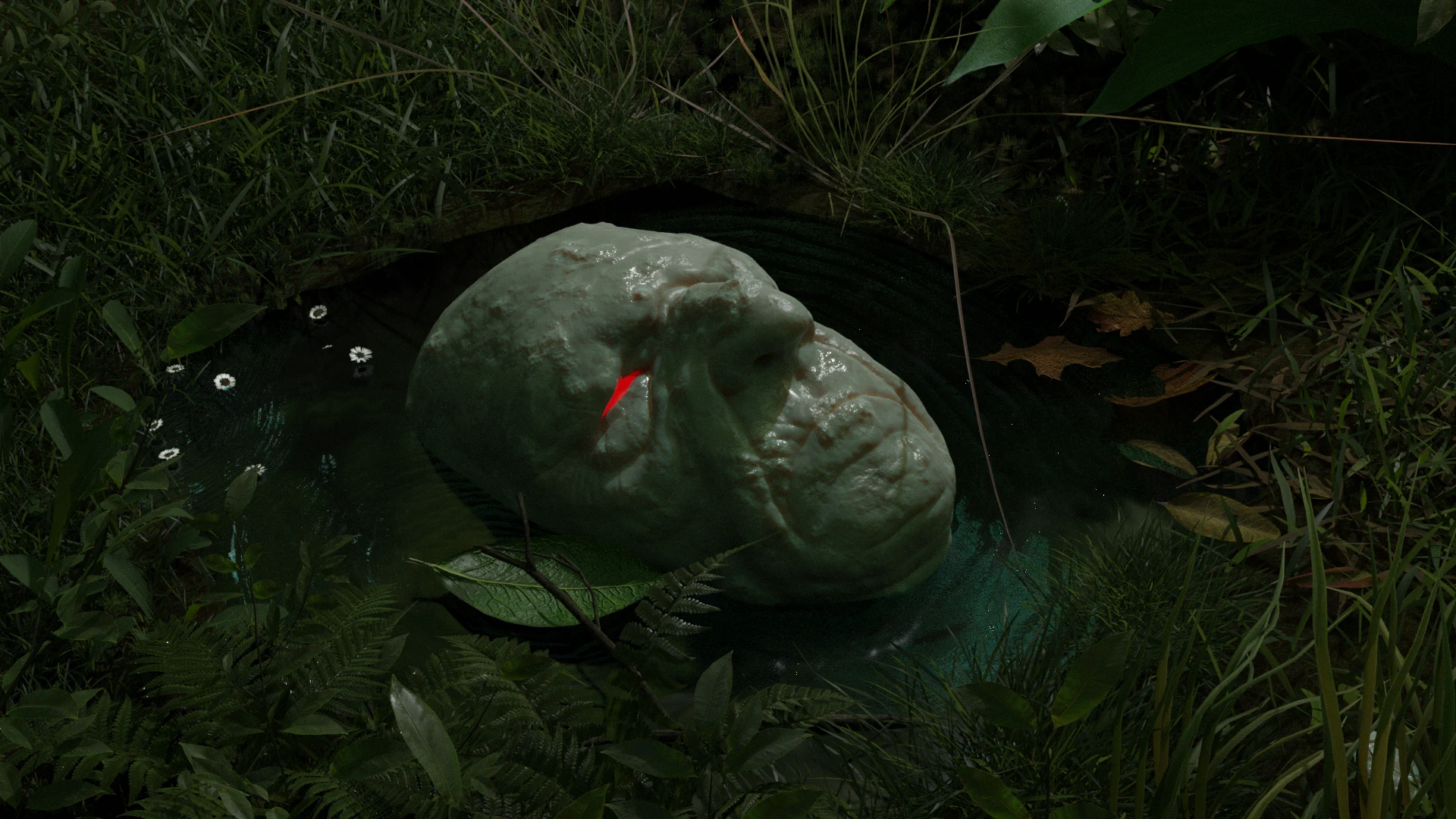
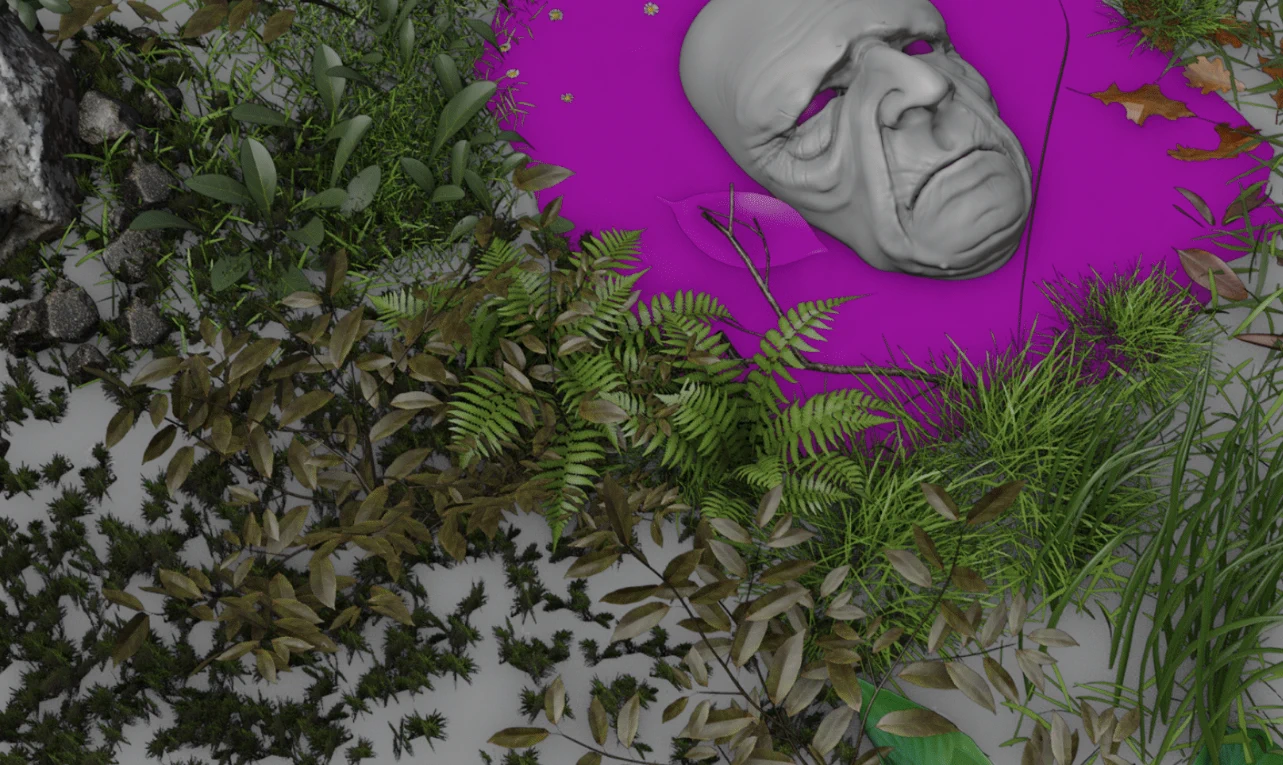
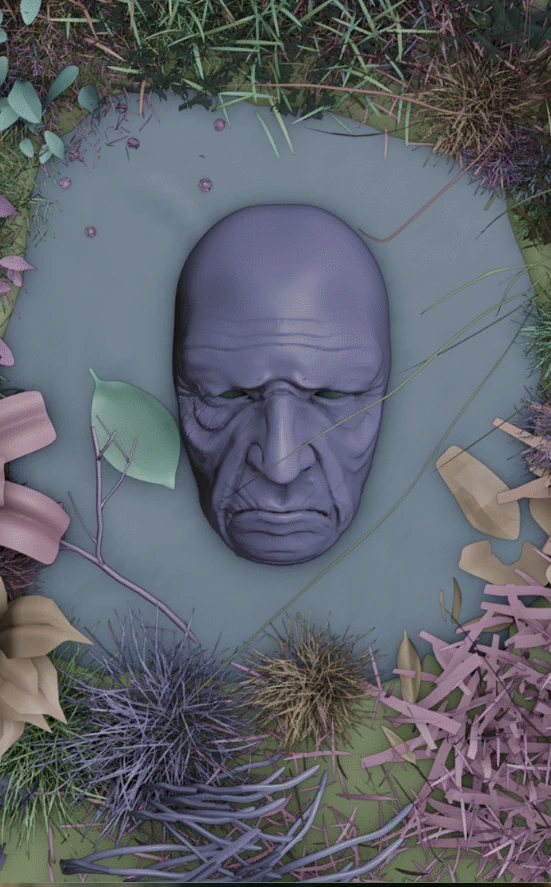
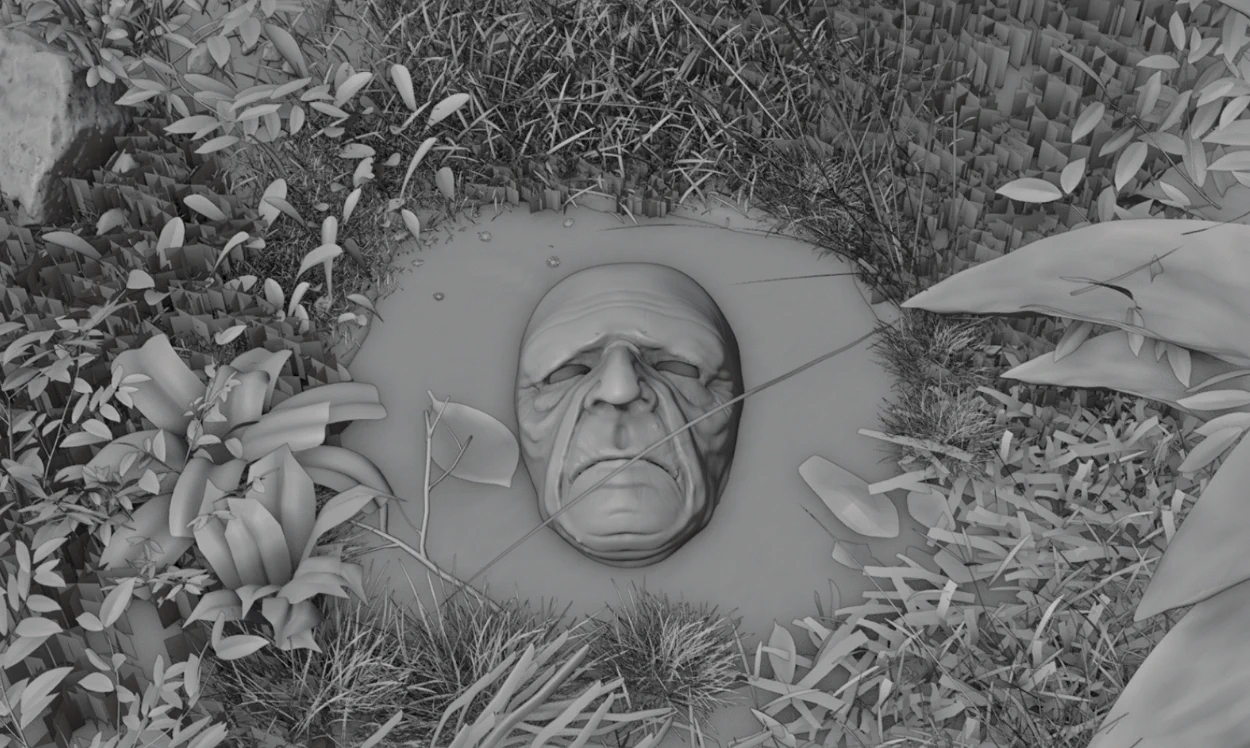
A single stone face, colossal in scale, half-submerged in a still dark pool and consumed by vegetation. The proportions suggest a buried deity or monument, something that was once vertical and prominent, now horizontal and forgotten. The environment study focused on the material intersection of stone and organic matter: wet rock catching light differently from dry, ferns and broad-leaf foliage pushing in from every side, and the flat black water surface providing an undisturbed reflection plane. The layout view shows the asset scatter setup, with the face, water plane, and foliage instances arranged in the editor before final lighting.
About This Collection
Early work. Different rules.
These environments were built without a brief, a client, or a defined end-use. Each one started from a single visual idea (a creature gate, a buried face, a vintage sign) and the question became: how far can this go before it stops being interesting? The work is from early in my practice, but the instinct behind it hasn't changed: spaces should feel inhabited, not decorated.