From Discovery to Transaction
Redesigning Instagram's Trust Architecture for the Indian D2C Ecosystem
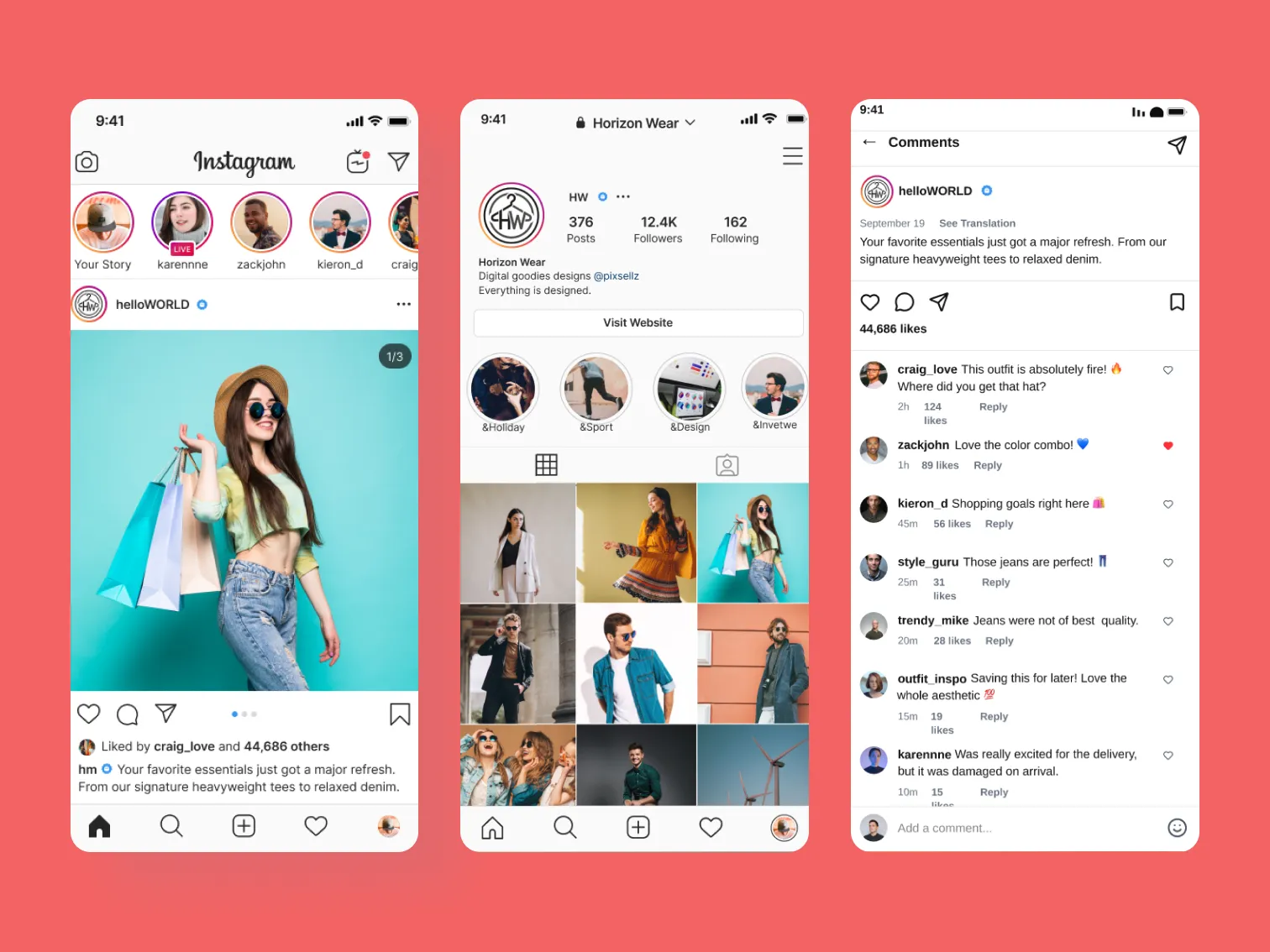

Instagram excels at awareness but falters at conversion, creating a massive drop-off for first-time visitors. In the Indian market, the platform suffers from a 99.6% total leakage rate at the Top-of-Funnel. While users are highly engaged with visual storytelling, a massive "Trust Ceiling" prevents them from transitioning from a passive, dopamine-seeking state to an active purchase state.
Hypothesis
"If we institutionalize a robust verification process for businesses and provide an instant visual indicator of their status, then we can collapse the distance between passive discovery and secure checkout.
This visual indicator acts as a psychological 'Green Flag,' satisfying the user's immediate need for legitimacy, converting passive browsers into confident, first-time purchasers."
Market Research
User Psychology
Dopamine vs. Intent
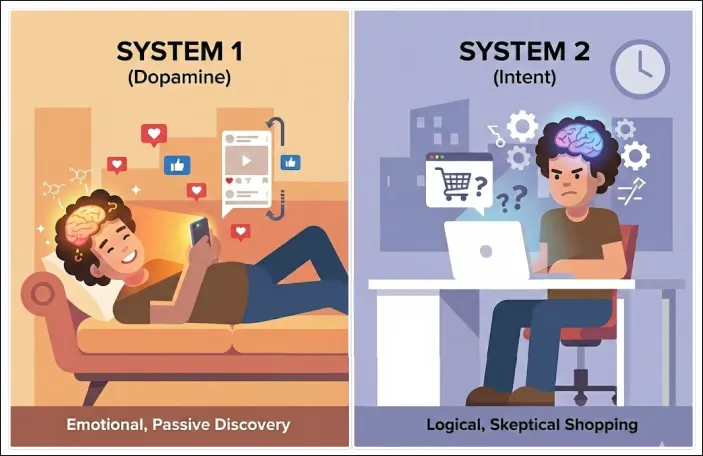
- Instagram Usage (System 1): Users seek micro-rewards through scrolling and visual discovery in an emotional, passive state.
- Shopping Activity (System 2): Purchasing requires a shift to logical, skeptical thinking.
- The Friction: Moving from a "System-1" to "System-2", causes cognitive snap-back, leading to immediate abandonment.

The Trust Deficit
- Pervasive Skepticism: Indian buyers treat new brands as potential scams until proven otherwise, especially in unorganized retail.
- The Pre-paid Paradox: Legitimate small shops often prefer UPI-only payments, but this behavior mimics common fraudulent tactics, triggering "red flags" for users.
Data & Funnel Analysis
To justify a strategic pivot, we must look at the hard numbers. The data confirms that Instagram in India, is a high-friction environment for commerce, especially for small businesses. "Trust" is the biggest factor.
The Top-of-Funnel
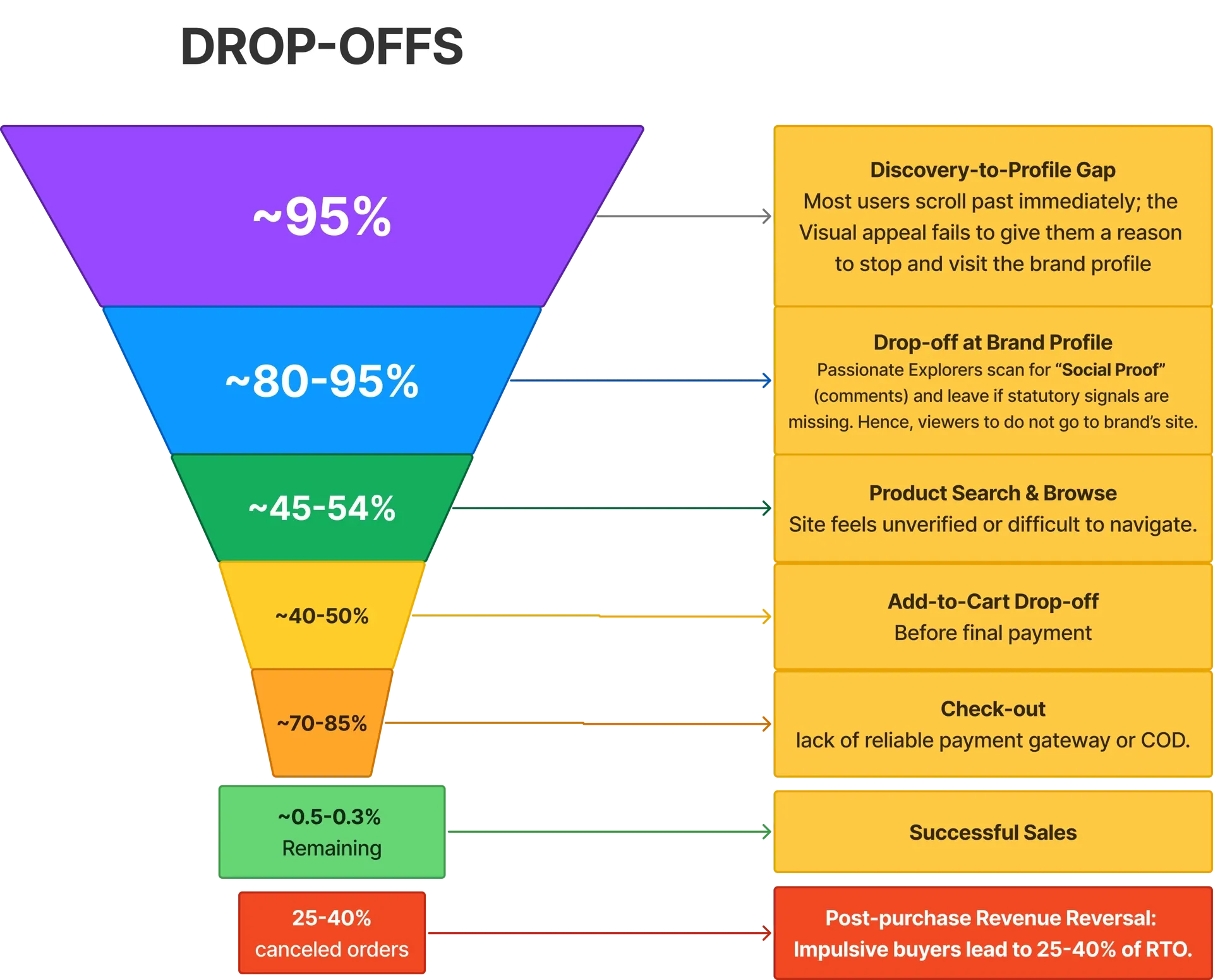
Analysis of industry-standard funnels for ~1,000 initial first-time comers, reveals 99.6% leakage. Conversion rate is fundamental broken at 2 specific junctions.
Trust Dividend: India v/s USA
The following data justifies why a Global verification strategy that works in the US fails to capture the full potential of the Indian market.
While a blue badge lifts US conversion to 3.4%, it only pushes Indian conversion to 0.4-1.0%. This suggests that Indian users require a better "tier" of proof to make purchase to feel as safe as a US consumer.
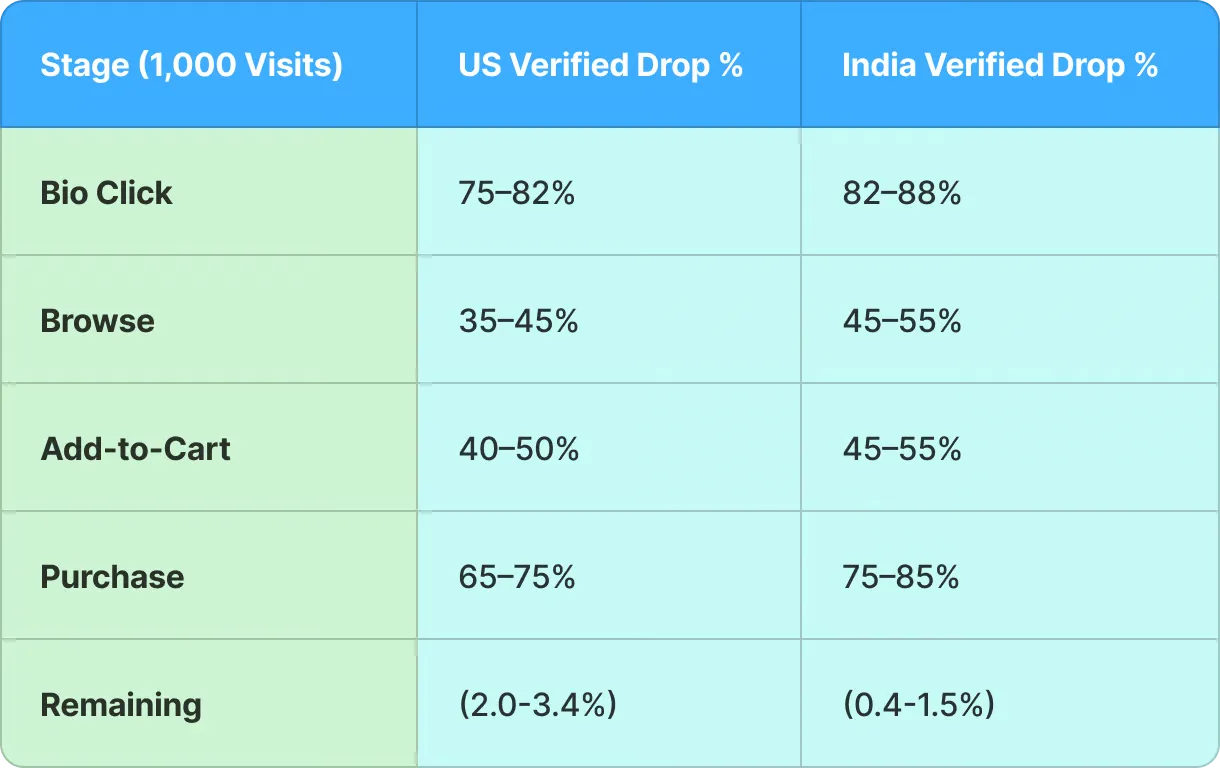
USA business has 2-3 X Conversion %, than Indian business.
User Personas
To bridge the Trust Gap, we must understand the specific psychological blockers of our three core users.
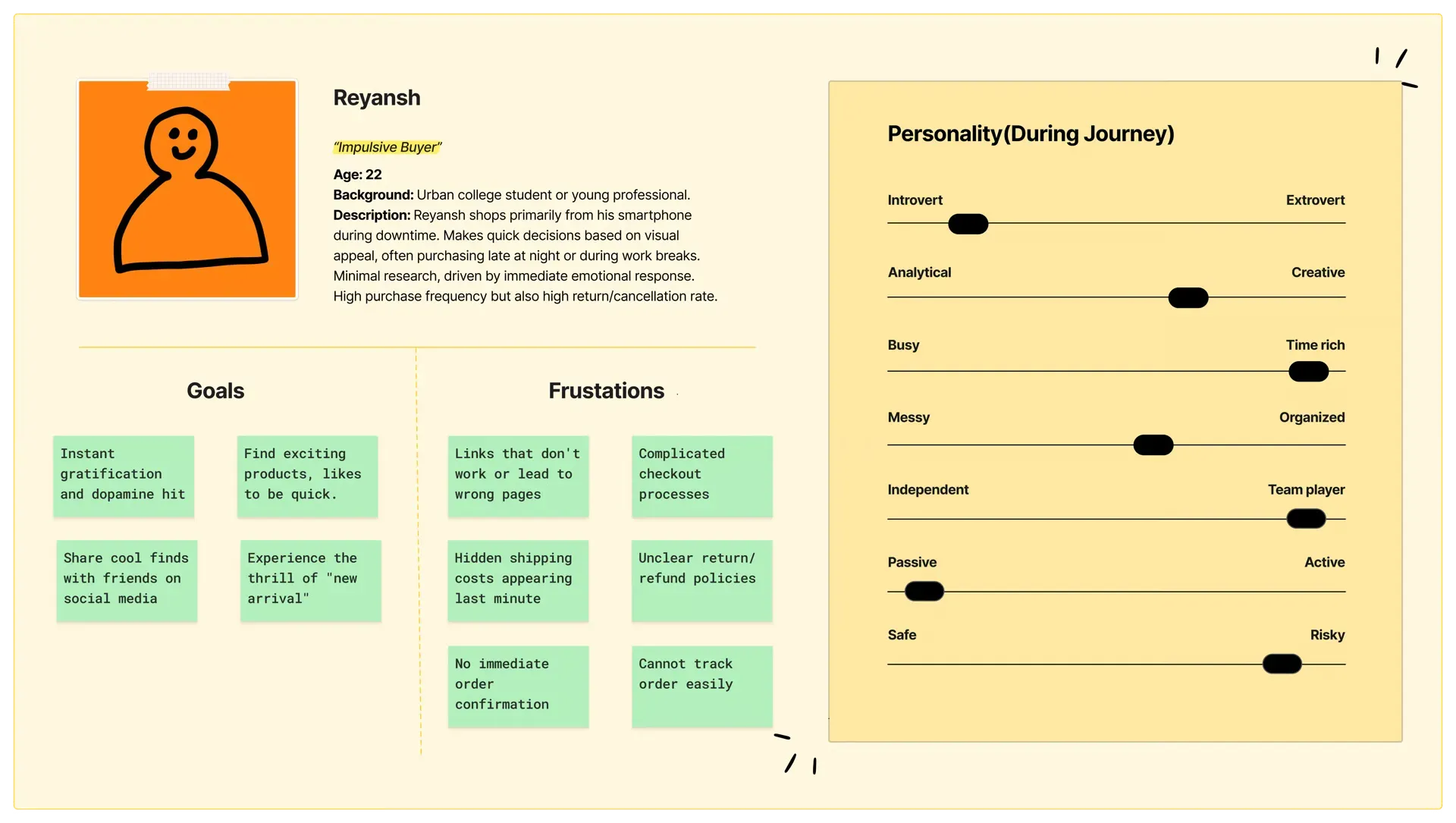
The Impulsive Buyer
"I wasn't looking for this, but I need it to make my day better."
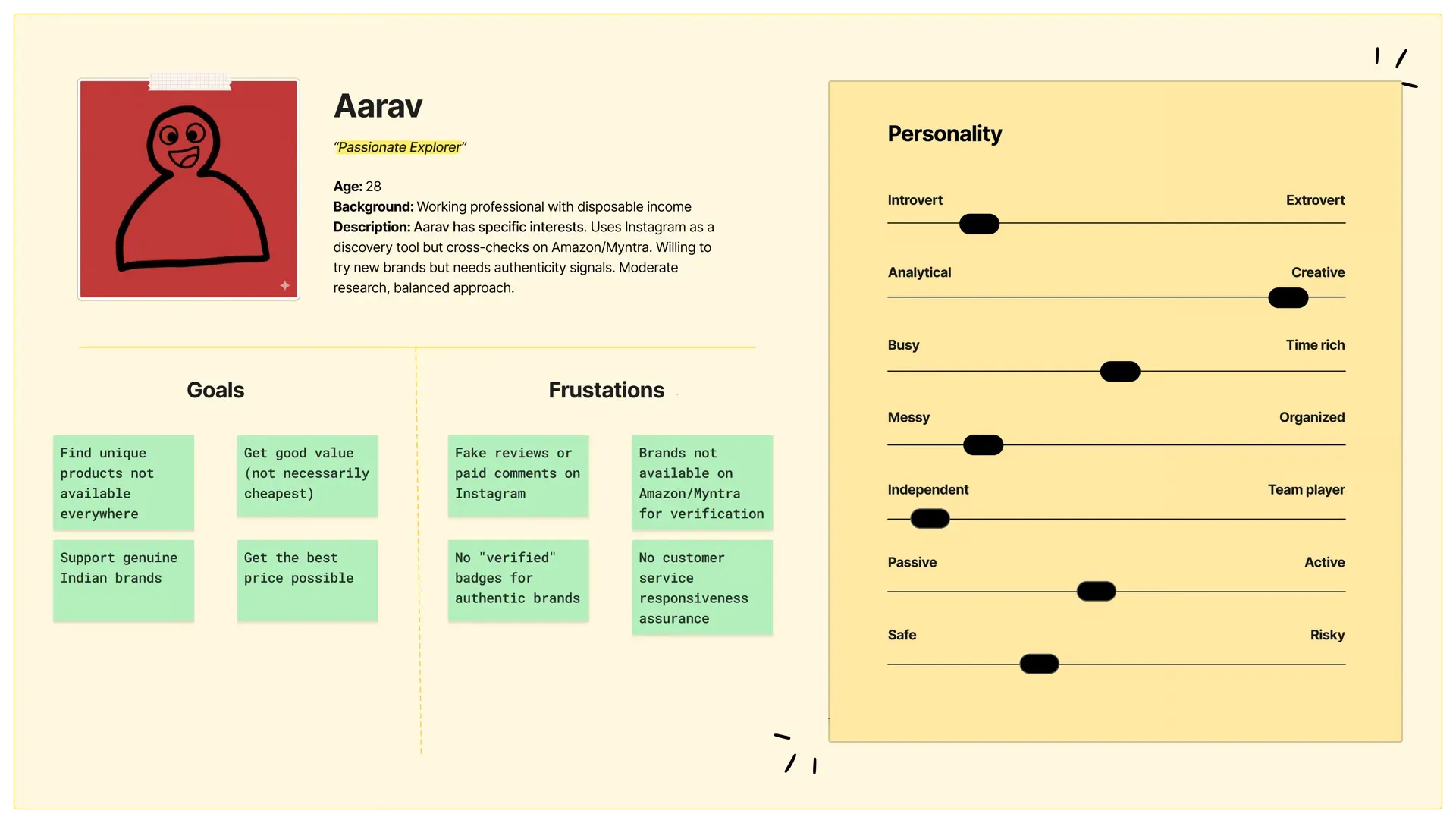
The Exploratory Buyer
"I love hidden gems, but I refuse to be a victim of a scam."
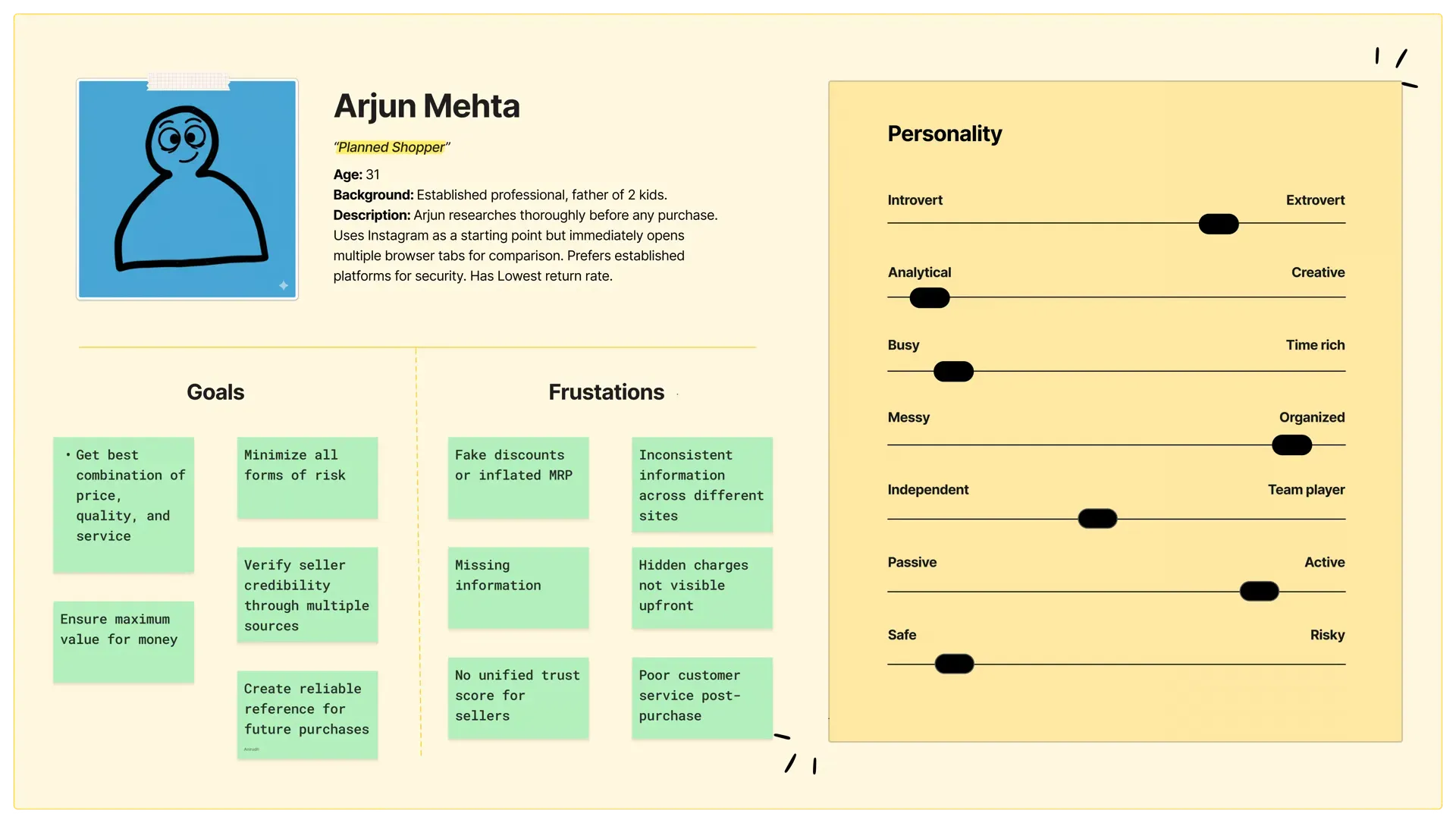
The Planned Buyer
"I use Instagram as visual search engine for new products, but I buy where I'm protected."
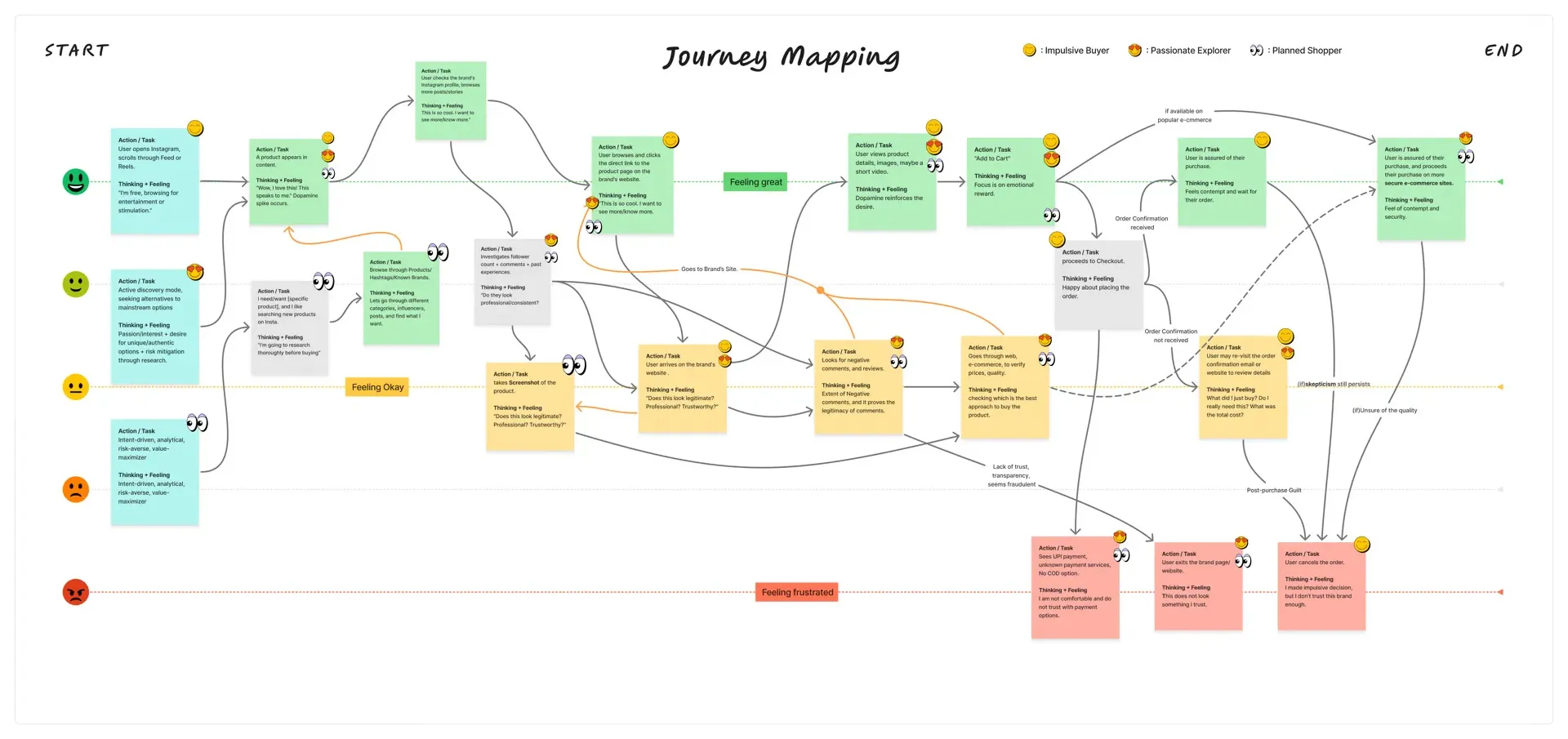
Personas' Journey Map
Key Insights from Personas'
Because the purchase happened in a "lower cognitive state," the user didn't do the research before buying. After the purchase, they snap to logical thinking. They think, "Wait, Is this purchase legit? Will they actually ship this? Will the quality be as good as advertised?".
AnirudhUsers find value in negative comments. They look for "Product was a bit small" (Legit) vs. "I never got my money back" (Danger). This is a vital UX insight: Transparency builds more trust than perfection.
AnirudhInstagram's failure here is that it acts as the "Dealer" but not the "Insurance". Since the user left the app to buy, they feel "orphaned" by Instagram the moment something goes wrong.
AnirudhOnce the "Buy" button is pressed, the dopamine levels drop. If the brand website doesn't provide an immediate "Order Tracked" or "Safe Purchase" reassurance, the user replaces that dopamine with cortisol (stress).
AnirudhAttributing conversions to Instagram ads becomes challenging when the user journey moves off-platform during the search process.
AnirudhThe Re-verification of products from other sources, Screenshot of product and product ads in Instagram, represents a moment where the app's internal search goes wrong.
AnirudhAnalyzing the Problem
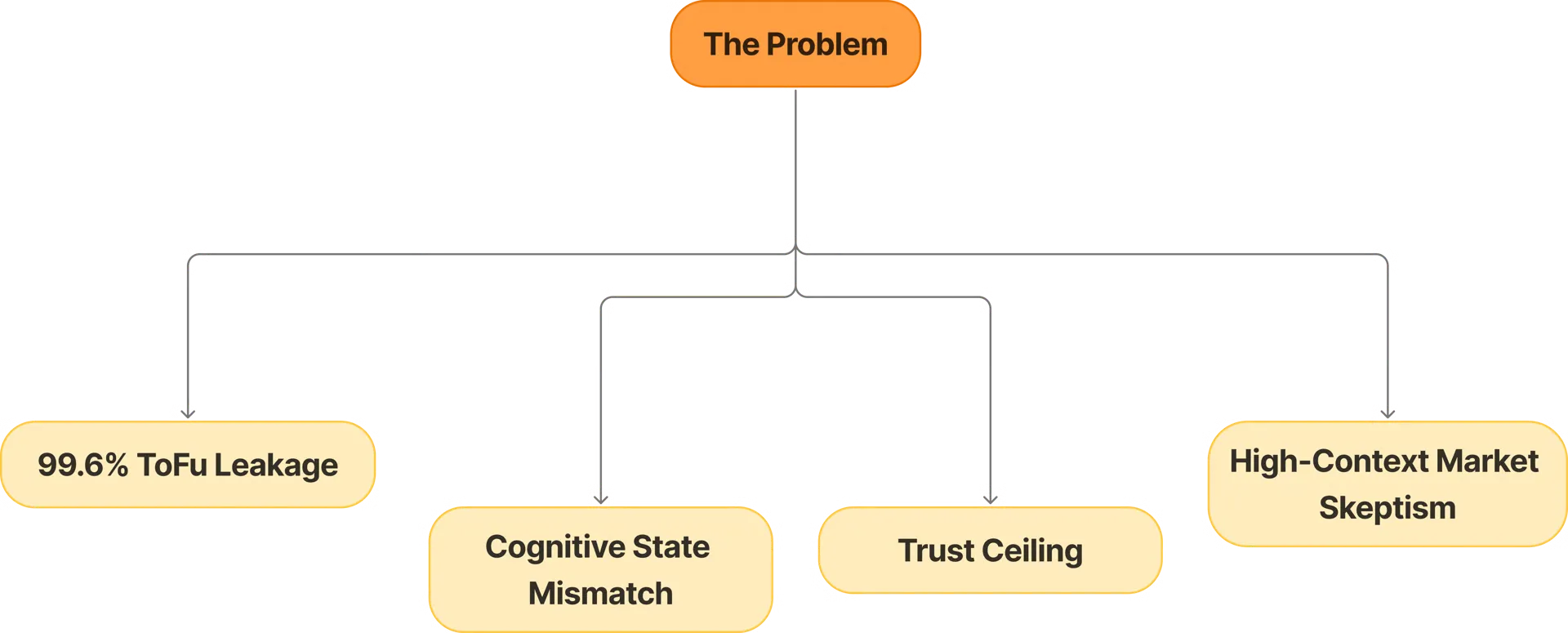
To move from identifying "leaks" to building "plumbing," we must categorize the friction points into actionable problem buckets. This ensures our solutions address specific user anxieties rather than just aesthetic gaps.
"Is this a scam?" Users lack a statutory signal to distinguish legitimate D2C brands from temporary social accounts.
Anirudh"Will anyone help me?" Fear of "Institutional Abandonment." Users don't know if Instagram or the seller handles returns/refunds.
Anirudh"Where is the data?" The app doesn't allow for price comparison or deep vetting, leading to the "Screenshot Failure Metric."
AnirudhThe North Star
"How might we institutionalize statutory accountability for Instagram businesses in India to bridge the 'Trust Gap,' thereby assuring the user and collapsing the distance between passive discovery and secure transaction, while also keeping users from exiting the app to verify brands elsewhere?"
Focus: Solving the 95% drop-off at the profile visit by providing an immediate, visual "Green Flag" of verification.
Focus: Eliminating/Reducing the need for "Cross-Platform Audits" where users leave to verify brands on Amazon or Google.
Focus: Reducing the "Cognitive Snap-back" and pre-delivery cancellations by anchoring the purchase in a legally accountable framework.
Proposed Solution
The current "Universal Blue Tag" creates a Categorization Failure. By grouping influencers, independent sellers, and established businesses under one badge, users apply a single, skeptical approach to all.
We introduce a distinct Shop Tag that is functionally separate from the influencer Blue Tick. This immediately signals a shift from "Social Popularity" to "Professional Accountability".


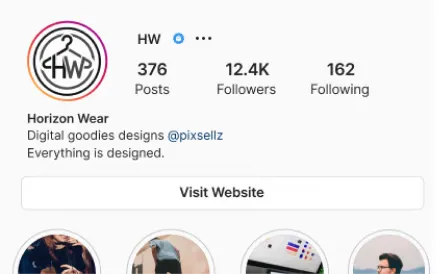
The current verification system is insufficient for the trust-heavy Indian e-commerce market. We propose an enhanced verification workflow that incorporates:
- Regulatory Compliance: Mandatory Udyam (MSME) registration, Shop & Establishment licenses, GSTIN certification(if), and FSSAI (for food & health category).
- Financial & Legal Proof: Business PAN and 3–6 months of bank statement history(Similar to Tiktok Shop).
- Social Trust Signals: Implementation of 'Response Time Badges', similar to Facebook, to quantify brand engagement and provide high-visibility social proof to prospective buyers.
Success Metrics
North Star Metric
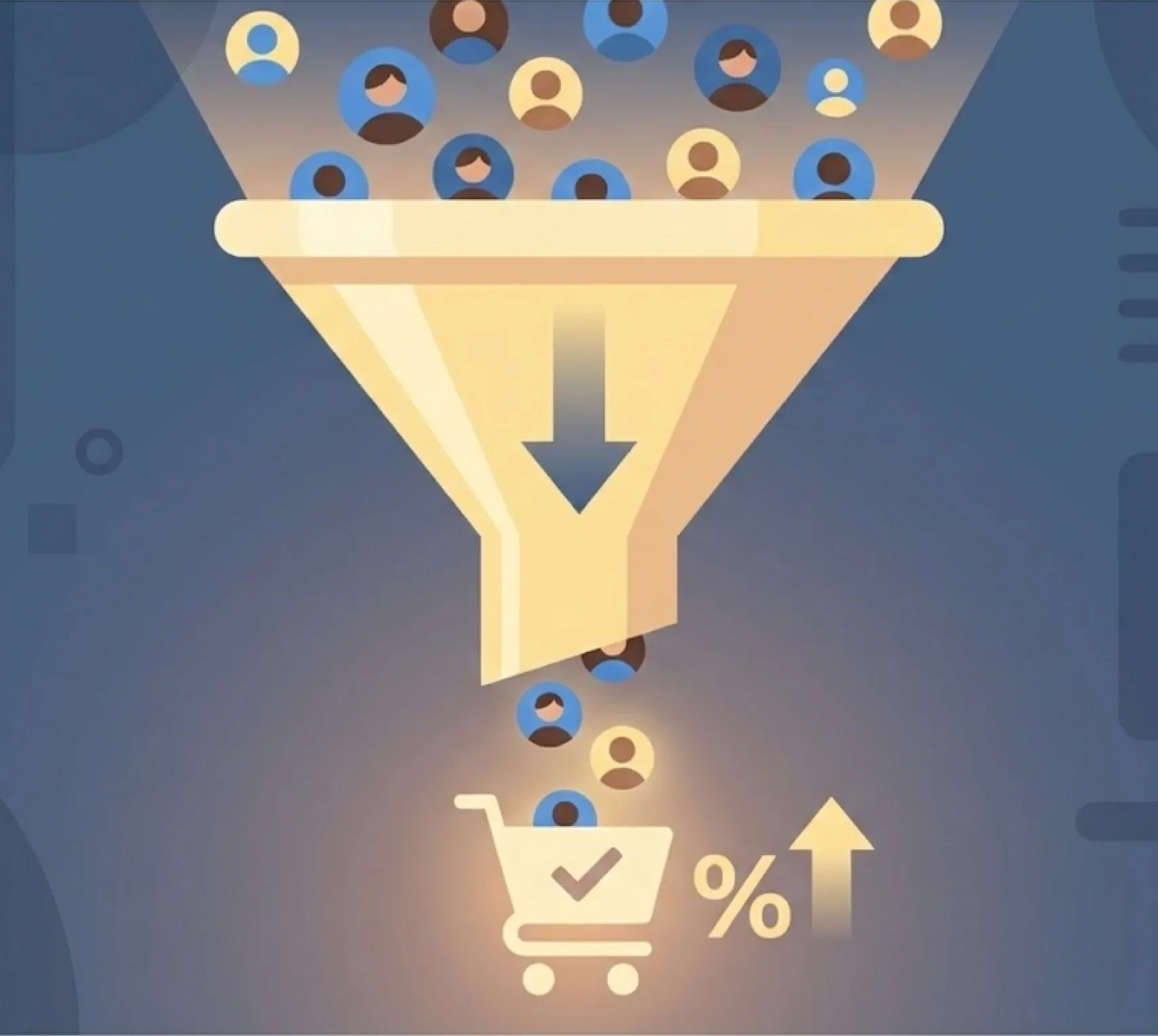
Checkout Conversion Rate (CVR): The percentage of users who progress from Profile Visit to Successful Transaction. Success is defined by bridging the 2.4% gap between the US and Indian conversion benchmarks.
Secondary Performance Metrics
Trade-Offs
This case study provided an invaluable opportunity to explore the complex intersection of consumer psychology, conversion optimization, and the critical role of trust in the Indian social commerce landscape.
Case Study By: Anirudh Singh